First-Timer Guide in Siem Reap & Angkor Wat
A visual guide from the Siem Reap and Angkor Wat travel guide — see all posters in Visual Guides.
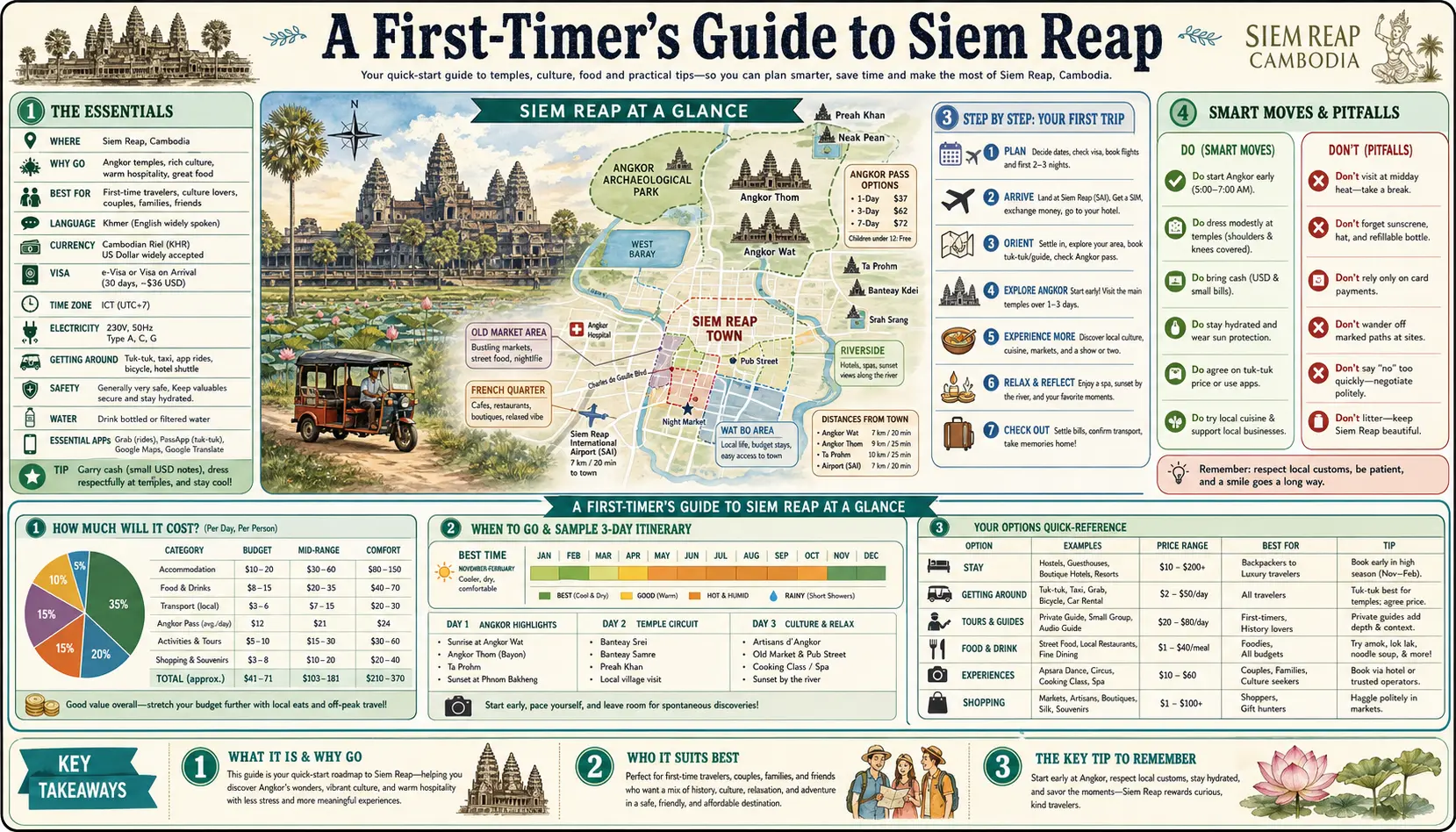
Most first trips to Angkor are planned around one image — the five towers reflected in the northern pond at sunrise — and then run into the reality of 5am alarms, a thousand other people and a temple complex the size of a small city. Angkor covers around 400 square kilometres, so the practical questions matter more than the wish list: how many days, which circuit, and who is driving. Get the pass and the pacing right and three days feels generous rather than punishing, with Siem Reap's restaurants and pools handling the afternoons.
Passes and pacing
Angkor passes are sold only at the Angkor Enterprise ticket centre on Road 60, a few kilometres from the centre, or online; drivers stop there on the way in. One-day, three-day and seven-day passes are offered, with the three-day valid across a ten-day window and the seven-day across a month, so rest days cost nothing. Expect somewhere in the region of US$37, US$62 and US$72 respectively. Two full days covers the essentials: the small circuit takes in Angkor Wat, Angkor Thom and Ta Prohm; the grand circuit adds Preah Khan, Neak Pean and Pre Rup.
Ground rules
US dollars are used for almost everything, with riel given as change at roughly 4,000 to the dollar; ATMs dispense dollars and usually charge a few dollars per withdrawal. Shoulders and knees must be covered to climb to the upper level of Angkor Wat. Heat is the real constraint — March to May regularly passes 35°C, so plan for a dawn start and a long midday break. A licensed English-speaking guide typically costs around US$40 a day and turns the carvings from decoration into narrative. Tuk-tuk drivers hired for a full day generally expect US$20 or so, more for Banteay Srei.