Grand Bridges and Gateways in Siem Reap & Angkor Wat
A visual guide from the Siem Reap and Angkor Wat travel guide — see all posters in Visual Guides.
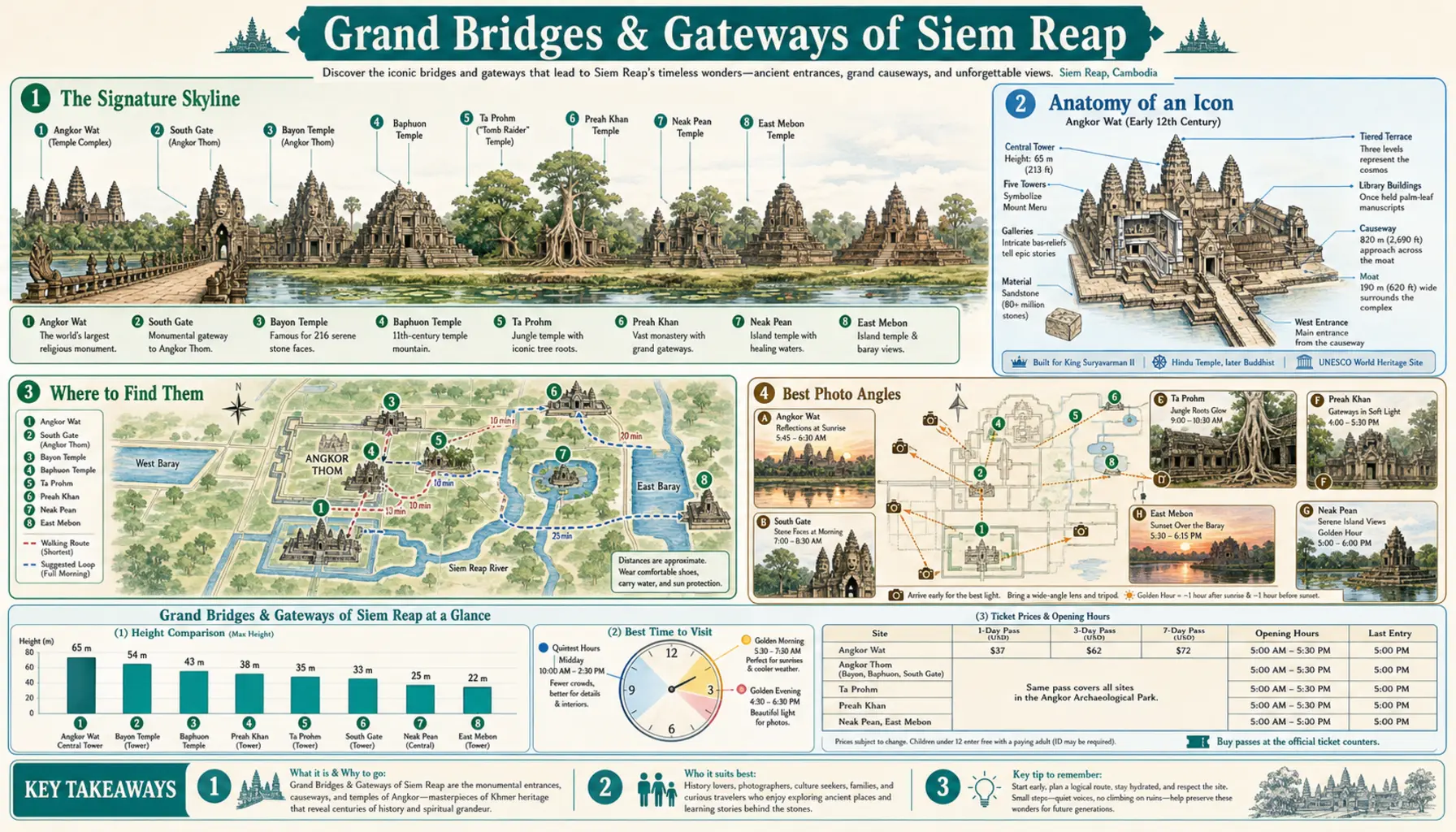
The approach to Angkor Thom is one of the great pieces of engineering theatre anywhere: a stone causeway over the moat, flanked by fifty-four gods on one side and fifty-four demons on the other, each row hauling on the body of a giant serpent. At the end, a gate tower more than twenty metres high carries four carved faces looking down the road. Khmer builders treated crossings as architecture rather than infrastructure, and the same instinct produced the corbelled laterite bridges that still stand on the old road east.
The five gates of Angkor Thom
The south gate is the best preserved and the busiest, since it sits on the main route from Angkor Wat — go early or late to photograph the causeway without a queue of minibuses. The north gate is a near-twin with a fraction of the traffic and makes a better first stop if the day starts at Preah Khan. Victory Gate opens onto the road past Thommanon and Ta Keo. The east gate, sometimes called the Gate of the Dead, and the ruined west gate are reached on rough tracks and see almost nobody.
Bridges worth the detour
Spean Praptos at Kampong Kdei, roughly 60 kilometres southeast on the old road to Phnom Penh, is the one to see: a twelfth-century corbelled laterite span with naga balustrades, long claimed as the largest surviving structure of its kind. Traffic now uses a modern bypass alongside, so the old deck can be walked. Closer in, Spean Thma sits between Ta Keo and Ta Prohm, its arches stranded where the river shifted course. Preah Khan and Banteay Kdei both keep fragments of god-and-demon causeways, quieter versions of the Angkor Thom set piece.