Iconic Landmarks in Siem Reap & Angkor Wat
A visual guide from the Siem Reap and Angkor Wat travel guide — see all posters in Visual Guides.
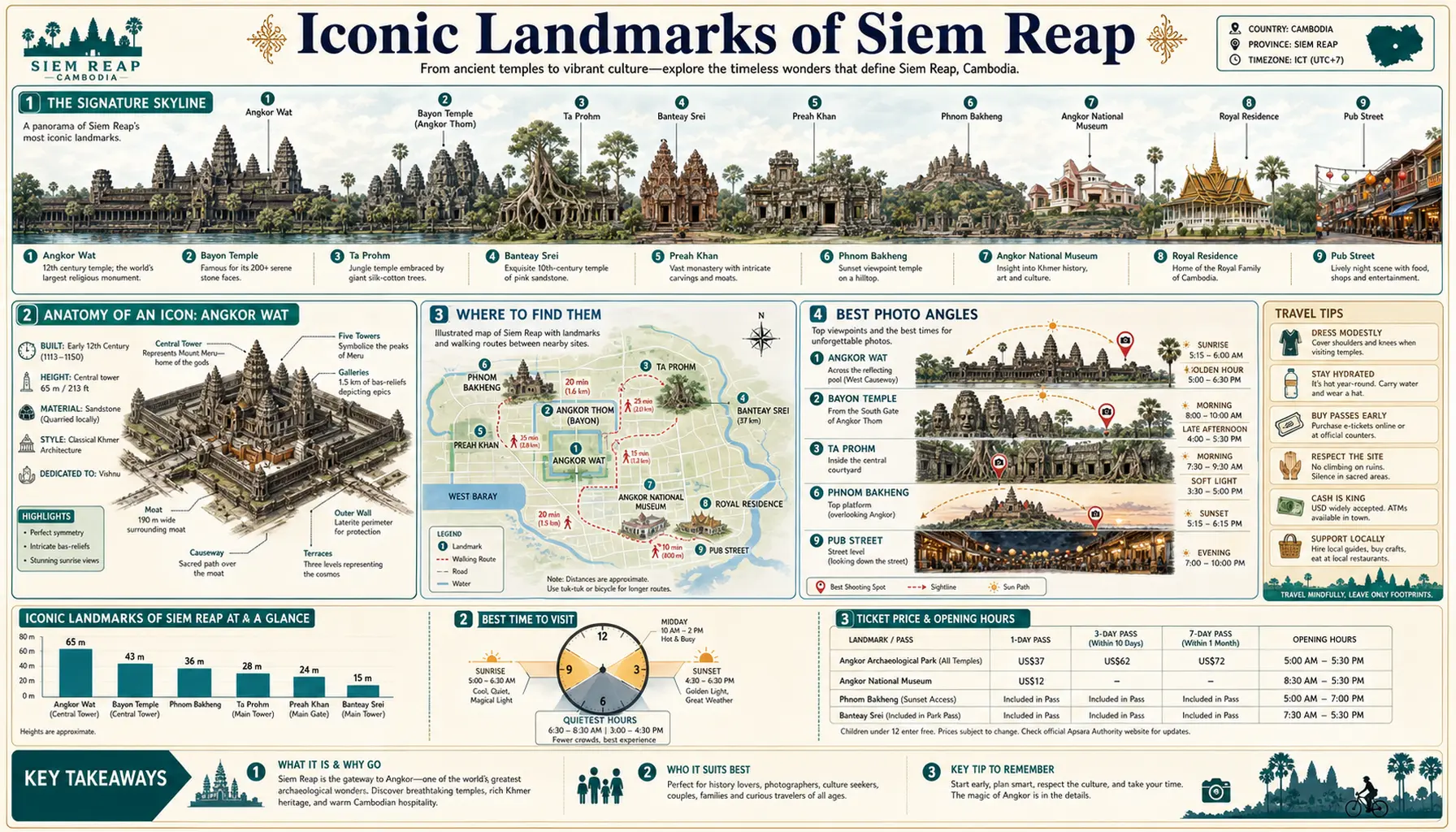
Three sites carry most of the weight here, and they are genuinely different from one another. Angkor Wat is geometry and scale — a moated rectangle with 800 metres of bas-relief galleries and five towers that only line up properly from the northern reflecting pond. The Bayon is the opposite: a compressed pile of towers carrying more than 200 carved faces at close range. Ta Prohm is the one people photograph most, where silk-cotton roots have grown through the galleries and the conservation teams have deliberately left some of them in place.
The essential four
Angkor Wat rewards two visits — sunrise from the north pond for the reflection, then a slower return for the Churning of the Sea of Milk relief on the east gallery, which is best in morning light. The Bayon is at its strongest in low sun, when the faces gain shadow; mid-morning flattens them. Ta Prohm is managed on a one-way route and gets very busy from eight, so arrive before that. Banteay Srei, some 35 kilometres northeast, is small but carries the finest carving at Angkor, cut into pink sandstone that glows in late afternoon.
Landmarks beyond the big three
Phnom Bakheng draws the sunset crowd from its hilltop above the plain, with numbers on the upper terrace capped and a queue forming well before the hour — Pre Rup, with its warm laterite and open platform, is the calmer alternative. The Terrace of the Elephants runs 300 metres along the old royal square in Angkor Thom, and Neak Pean's circular island pond is unlike anything else in the park. In town, the Raffles Grand Hotel d'Angkor dates from 1932 and the Angkor National Museum on Charles de Gaulle Road is the best indoor stop when it rains.