Islands Within Reach in Siem Reap & Angkor Wat
A visual guide from the Siem Reap and Angkor Wat travel guide — see all posters in Visual Guides.
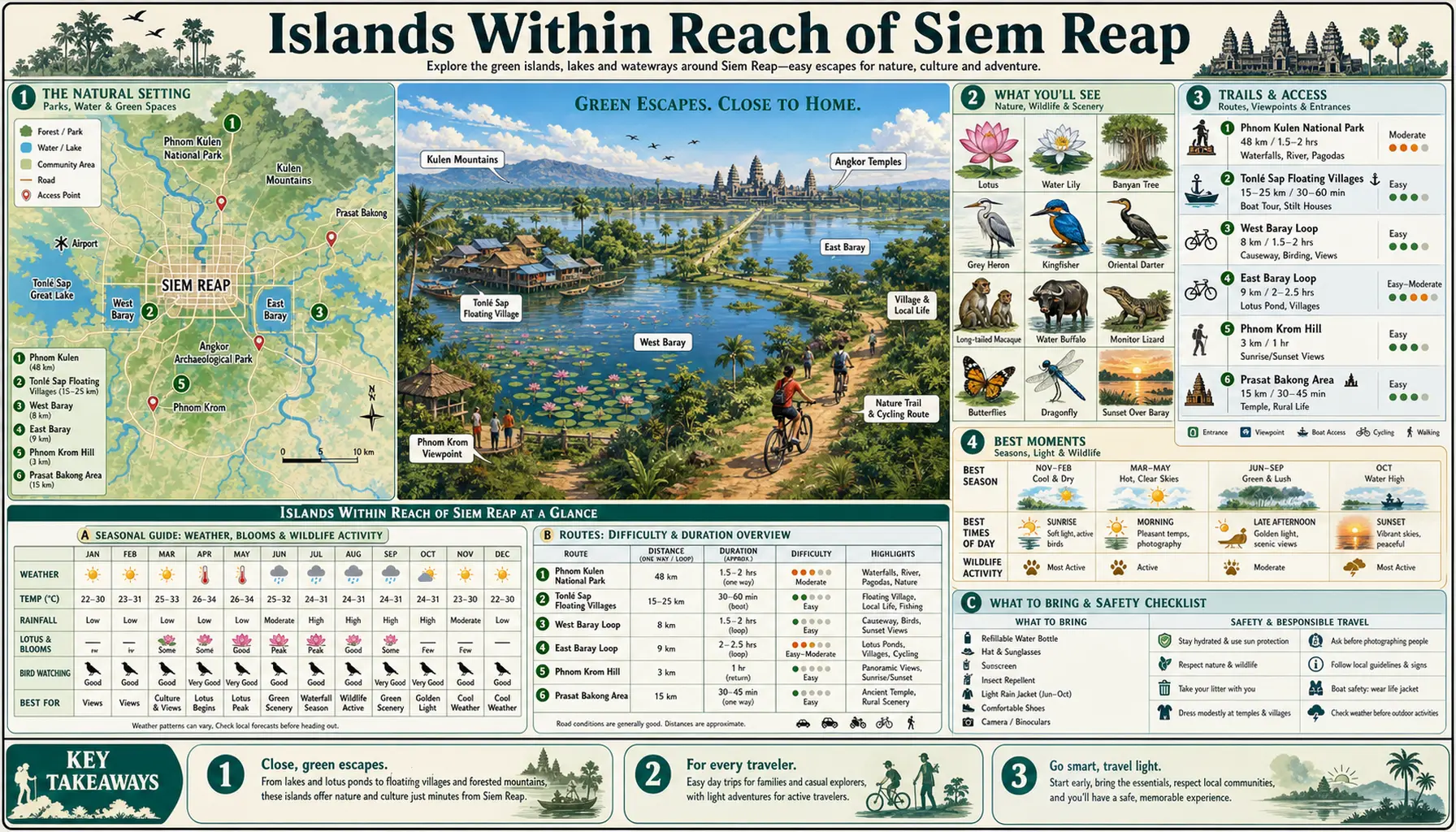
Siem Reap sits about 300 kilometres from the sea, so the islands nearest to it are made of water rather than rock. From roughly September to November the Tonlé Sap swells to several times its dry-season size and the stilt villages on its northern shore — Kompong Phluk, Kompong Khleang, Mechrey — become genuine islands, reached only by boat through flooded forest. Come back in April and the same houses stand several metres up on bare poles above cracked mud. For sand and snorkelling, the Gulf of Thailand needs a separate leg of the trip.
The lake villages
Kompong Phluk lies about 30 kilometres south and is the usual compromise — stilt houses, a flooded forest paddle by sampan and a half-day round trip. Kompong Khleang, roughly 50 kilometres southeast, is much larger, genuinely lived-in and sees a fraction of the traffic; allow the best part of a day. Chong Kneas is closest to town and the most heavily commercialised, with a long history of pressured donation stops, so many visitors skip it. Book through a reputable operator, expect roughly US$25–40 per person including the boat, and go in the wet season if possible.
Reaching real islands
Cambodia's beach islands sit off Sihanoukville: Koh Rong for the party end and long white beaches, Koh Rong Sanloem for something quieter, both around 45 minutes by fast ferry from the mainland pier. From Siem Reap that means either a flight, usually via Phnom Penh, or a long overnight bus of ten hours or more. Koh Trong, a river island opposite Kratie with bicycle tracks and homestays, is the more realistic overland detour at roughly six to eight hours. Prek Toal, the bird reserve on the Tonlé Sap, is closer still and best from December to February.