Monuments and Memorials in Siem Reap & Angkor Wat
A visual guide from the Siem Reap and Angkor Wat travel guide — see all posters in Visual Guides.
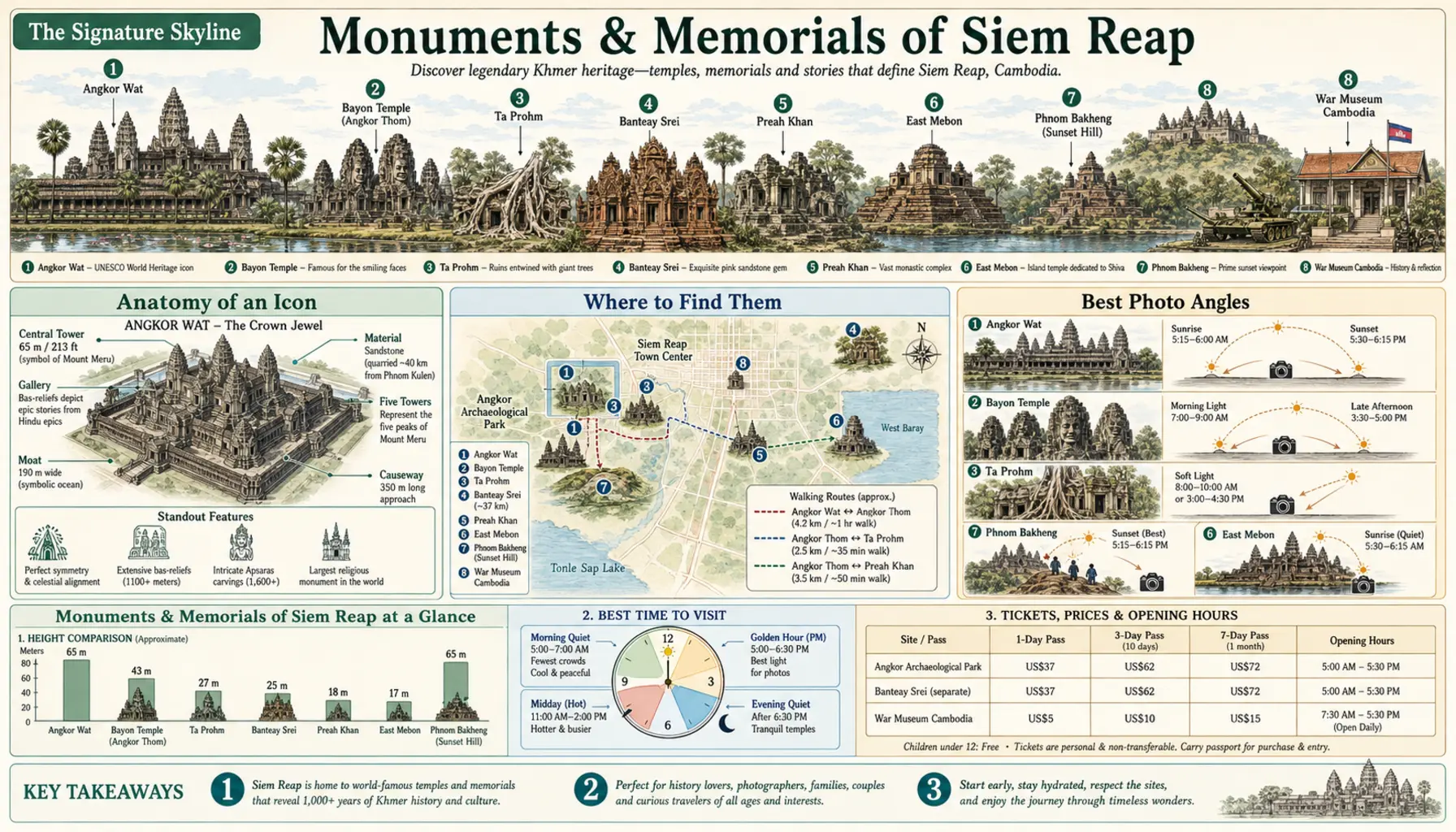
Two kilometres up the road to Angkor, behind a working monastery, stands a slim glass-sided stupa holding skulls and long bones recovered from a Khmer Rouge burial site on the same ground. Wat Thmey is Siem Reap's killing-fields memorial and it asks for ten quiet minutes, no more. This province was fought over into the late 1990s — the outer temples were mined, and the last Khmer Rouge holdouts gave up two hours north at Anlong Veng — so the town's twentieth-century sites are recent, plainly presented and worth a morning.
The four to see
Wat Thmey sits on Charles de Gaulle Road between town and the park, the stupa and its explanatory boards a short walk in from the gate. The War Museum Cambodia, west of the centre off the road to the old airport, is an open-air yard of tanks, artillery, a MiG and a helicopter, and its real strength is that the guides are veterans who fought with or against the machines they walk you past. The Cambodia Landmine Museum, roughly 25 km north near Banteay Srei, was founded by the former child soldier turned deminer Aki Ra. APOPO's visitor centre, out toward the ticket gates, demonstrates the giant pouched rats trained to find buried mines.
Making sense of it
The fuller picture is up National Road 67 at Anlong Veng, about two and a half hours north on the Dangrek escarpment, where the Documentation Center of Cambodia has marked the last Khmer Rouge stronghold — Ta Mok's house and lake, Pol Pot's roadside cremation site — as a peace-studies trail rather than a spectacle. Closer in, the Royal Independence Gardens on Pokambor Avenue hold the town's civic monuments and a noisy colony of fruit bats in the trees above them. The private museums charge a small entry fee, and each says it puts that money back into demining and education rather than into the gate.