Music and Dance Traditions in Siem Reap & Angkor Wat
A visual guide from the Siem Reap and Angkor Wat travel guide — see all posters in Visual Guides.
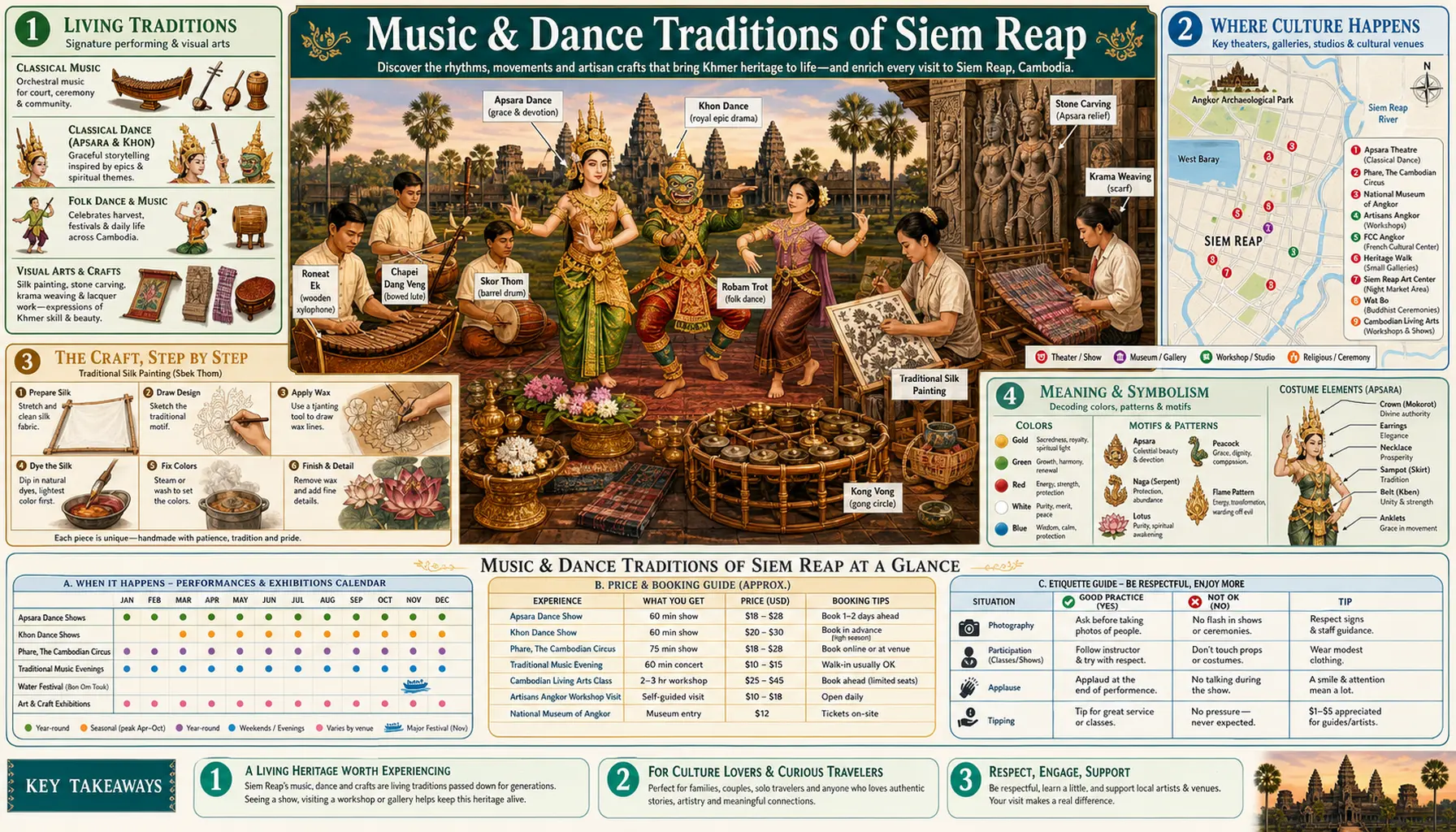
The dancers came first as stone. Angkor Wat alone carries close to 1,800 carved devata figures, no two headdresses quite alike, and Preah Khan has a whole colonnaded Hall of Dancers built for performances that once filled it. What survives on stage today is a reconstruction — the classical repertoire was rebuilt after the 1970s from the memories of the few teachers who lived through them — and Siem Reap is where most visitors meet it, alongside a thoroughly modern circus company that plays to a full big top every night of the week.
What to book
Phare, The Cambodian Circus is the strongest ticket in town: a nightly show under a big top off Ring Road near Sok San Road, performed by graduates of a Battambang arts school, with a live band and stories about land, war and city life rather than temples. Performances usually begin around 20:00 and sell out in high season. For classical dance, the Apsara Theatre's wooden pavilion near Angkor Village stages a short, well-lit programme with dinner, and several hotels run buffet-and-show evenings. Bambu Stage's shadow performance uses sbek thom, the large pierced hide puppets on UNESCO's heritage list.
The older sound
The instrument to listen for is the chapei dang veng, a long-necked lute played by a singer who improvises satirical verse between phrases. It came close to dying out, sits on UNESCO's urgent-safeguarding list, and turns up at arts-centre evenings and occasional bar sets rather than on any fixed schedule. The pinpeat ensemble — gong circles, xylophones, a reedy oboe and drums — is what accompanies classical dance, and its tuning takes a Western ear a few minutes to settle into. Out near Banteay Srei, the Sacred Dancers of Angkor train village children in the old repertoire and perform for visitors by arrangement.