Neighbourhoods Decoded in Siem Reap & Angkor Wat
A visual guide from the Siem Reap and Angkor Wat travel guide — see all posters in Visual Guides.
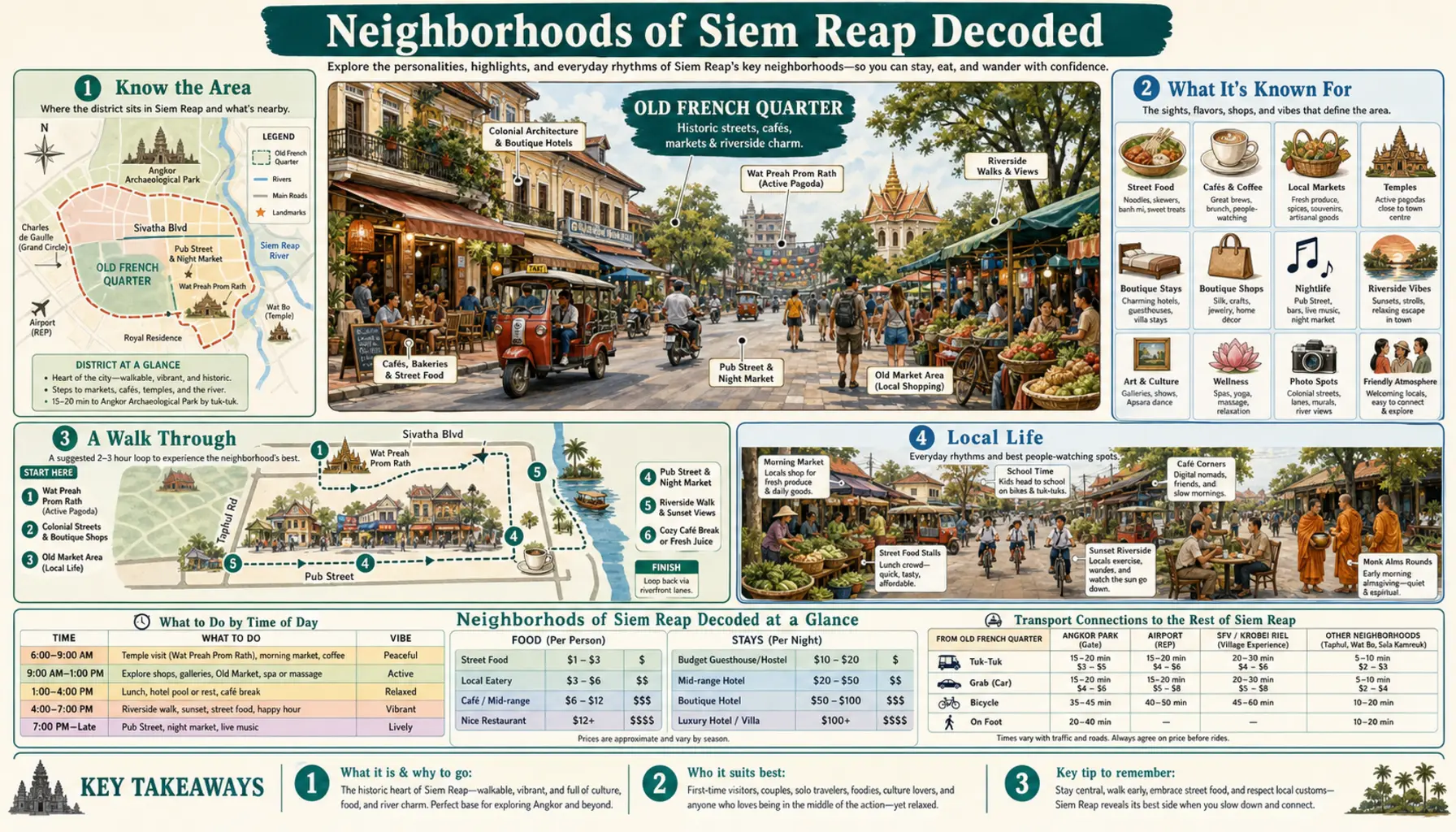
Siem Reap is small enough to cross by bicycle in twenty minutes, so the differences between its quarters come down mostly to noise. The river runs north to south through the middle; Sivatha Boulevard runs parallel a few hundred metres west. Between them sits the Old Market grid, where the bars are. Cross east over the water and it goes quiet almost immediately. Head west past Sivatha and it turns cheap and loud again. North along the temple road the resorts spread out behind walls and mango trees, and nothing much happens after dinner.
The central quarters
The Old Market area — Psar Chas, Pub Street and the two narrow parallel lanes known as The Lane and Alley West — is the compact centre: shophouse bars, massage chairs, tour desks and most of the night markets inside a five-minute walk. Rooms here are convenient and audibly so until around one in the morning. Kandal Village, a couple of streets west around Hup Guan Street, is the same distance from everything but far calmer, with boutiques, small design shops and the best run of cafés. Sok San Road, further west again, is the hostel and late-club strip, cheapest of the lot and the last to go quiet.
East bank and the outskirts
Cross a footbridge and Wat Bo Road is a different town: shaded, mid-range guesthouses, a strong line of restaurants and bakeries, five minutes back to the bars when you want them. Further south, Wat Damnak and Sala Kamreuk are residential and greener, sensible if you are staying a week. Charles de Gaulle Road, running north toward the temples, is the resort belt — big pools, big gardens, a tuk-tuk needed for everything. Route 6 out toward Phsar Leu is where the town does its own shopping, and where prices stop being tourist prices.