Packing and Seasons Guide in Siem Reap & Angkor Wat
A visual guide from the Siem Reap and Angkor Wat travel guide — see all posters in Visual Guides.
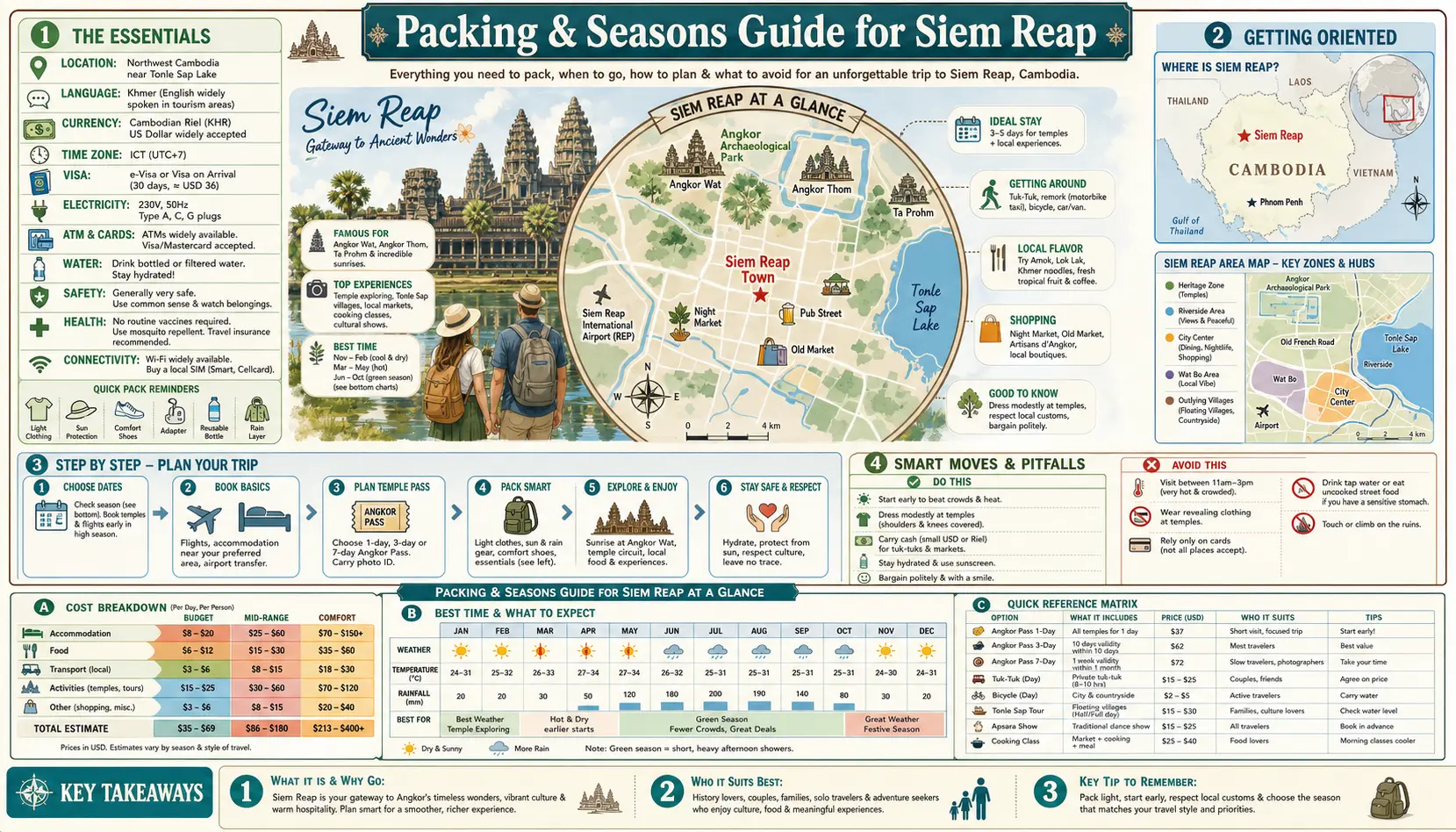
The difference between a good day at Angkor and a punishing one is usually about four hours and one shirt. From November to February the mornings are genuinely cool, sometimes under 20°C on the back of a tuk-tuk at five o'clock, with afternoons in the low thirties. By April the stone radiates heat and the middle of the day is unusable. From around June the rain arrives as short heavy afternoons, the moats fill, the countryside turns luminous green and the crowds thin out considerably.
Choosing your month
November to February is peak season for good reason — dry, clear, comfortable — and also when the sunrise pond at Angkor Wat is three deep in tripods and the early-December half marathon fills the hotels. March to May is hot, April hardest of all, with Khmer New Year in the middle of it when much of the country travels and Angkor fills with Cambodian families. June to October brings afternoon storms rather than all-day rain, the lowest room rates and the best photographs; September and October give the highest water for the Tonlé Sap villages and the flooded forest.
What to bring
Loose long sleeves and light trousers beat shorts: they cover shoulders and knees, which is required at the temples and firmly enforced for the upper level of Angkor Wat, and they keep the sun off. Shoes with real grip matter more than people expect, because the stairs at Ta Keo, Pre Rup and the upper terrace are steep and worn smooth. Add a torch for the collapsed galleries at Beng Mealea, repellent, high-factor sunscreen, a refillable bottle — the Refill Not Landfill campaign started here and refill points are common — a rain shell from June, and clean US dollar notes, since torn ones are often refused.