Palaces and Royal Architecture in Siem Reap & Angkor Wat
A visual guide from the Siem Reap and Angkor Wat travel guide — see all posters in Visual Guides.
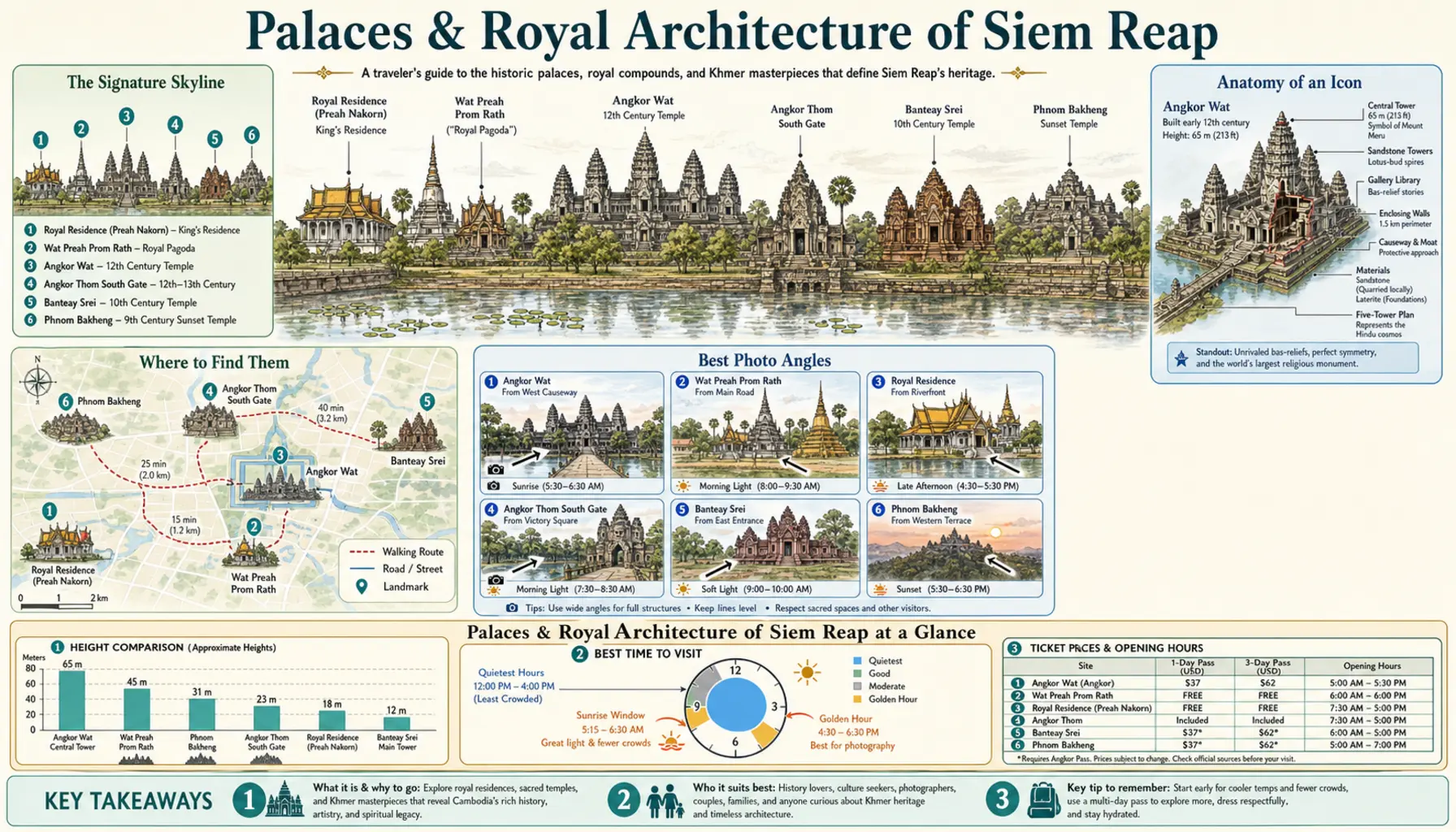
The kings of Angkor built their temples in stone and their palaces in wood, so what survives of the royal quarter inside Angkor Thom is a laterite wall, two bathing ponds, a stepped pyramid and a viewing terrace roughly 350 metres long. Stand on the Terrace of the Elephants facing the old parade ground and the arrangement reconstructs itself easily enough: the court above, the army below, and behind you a compound of halls and pavilions that rotted away centuries ago. It is the emptiest and least visited corner of Angkor Thom.
Inside the royal enclosure
The way in is at the northern end of the Terrace of the Elephants. Phimeanakas, the palace's own state temple, is a compact three-tier pyramid you can circle at ground level, its steep stairs usually roped off. Behind it lie Srah Srei and Srah Pros, the royal bathing ponds, still holding water inside carved sandstone steps. Preah Palilay and Tep Pranam stand among trees to the north-west, and the inner wall of the Terrace of the Leper King — a double wall concealing a second carved face — holds the best-preserved sculpture in the area. Allow an hour, ideally late afternoon when the enclosure empties.
Royal traces in town
Srah Srang, the broad reservoir east of Banteay Kdei with its landing stage of lions and naga balustrades, served as a royal bathing pool and is now the quietest sunrise in the park. In Siem Reap itself the Royal Residence sits on Pokambor Avenue opposite the Royal Independence Gardens, used by the king when he visits and visible from the road rather than open to it. The most interesting royal building of the past century is Amansara on the temple road: a low white villa with a circular dining pavilion, built in 1962 as King Norodom Sihanouk's guest house for visiting heads of state.