Souvenirs and What to Buy in Siem Reap & Angkor Wat
A visual guide from the Siem Reap and Angkor Wat travel guide — see all posters in Visual Guides.
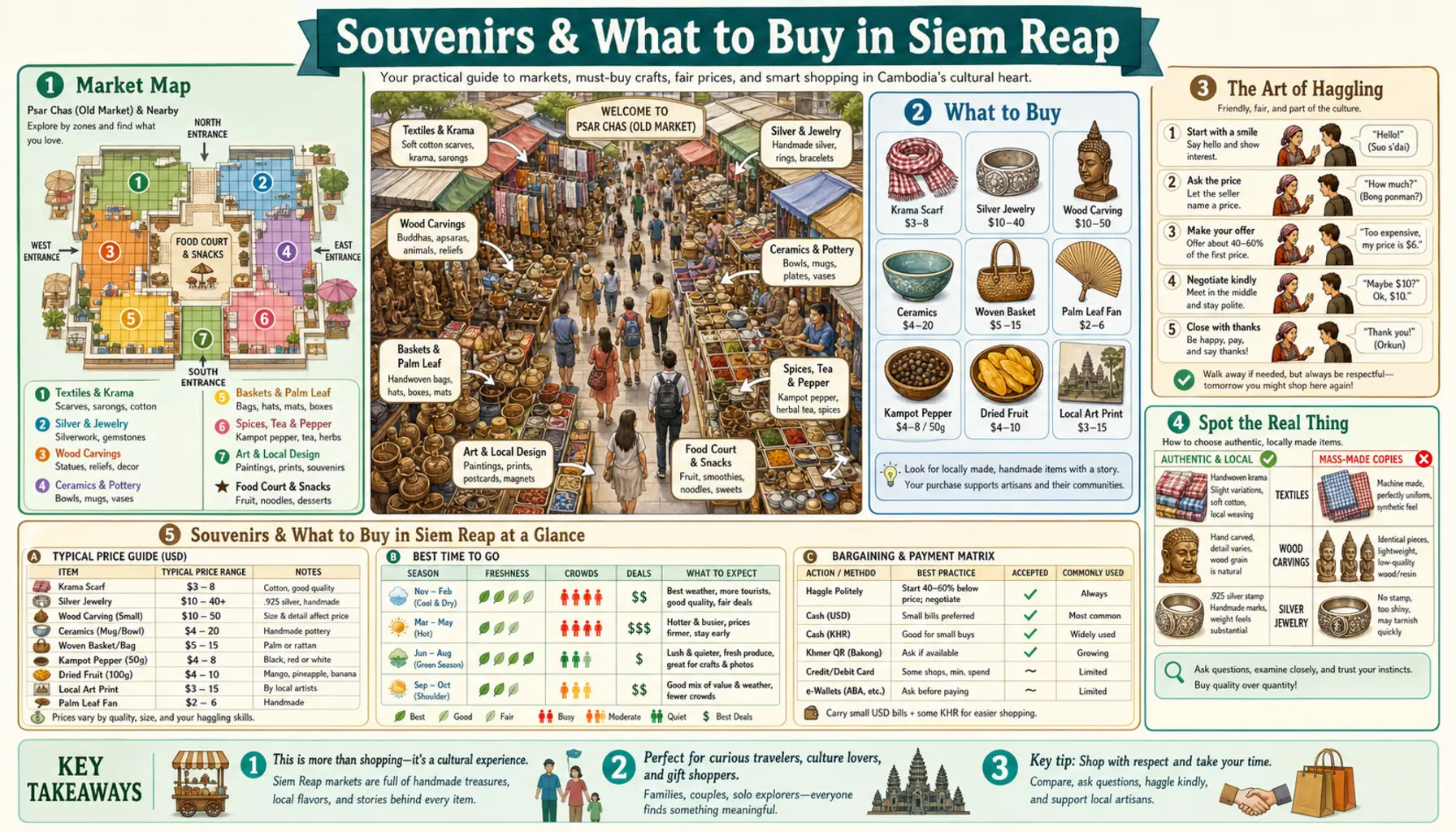
A krama costs a couple of dollars in the Old Market and is the most useful thing on sale in Siem Reap: a checked cotton scarf that Cambodians use as sunshade, towel, sling and dust mask, often all in one day. Beyond it, the town is unusually good for small, packable things with a real maker behind them. Pepper carrying a protected Kampot name, silk woven at a farm 16 km west, rice liqueur infused with ginger and star anise and sold in bottles painted one at a time by hand.
Worth carrying home
Kampot pepper, in black, red and the expensive white, is the standout edible: sold vacuum-packed and it travels well. Kampong Speu palm sugar comes in pale discs or as a thick paste. Artisans Angkor, with a workshop on Stung Thmey Street, sells silk, stone and lacquer made by people you can watch working, and also runs the silk farm at Puok. Sombai, near Wat Damnak, infuses rice spirit with ginger, anise, coconut or chilli in hand-painted bottles and lets you taste first. Khmer Ceramics on the Charles de Gaulle road fires celadon on site, and Eric Raisina's couture house works silk and raffia into scarves and jackets at the fashion end.
What to leave behind
Exporting genuine antiquities is illegal and enforced, so anything sold as an ancient carving is a reproduction, fine to buy at reproduction prices and not at antique ones. Skip ivory, shells, coral and anything made from wildlife. The mass-produced Buddha heads and elephant-print trousers stacked on night-market tables are largely imported and priced for the unhurried, so bargain firmly or walk on. Pay in US dollars, with change under a dollar returned in riel. If pepper or palm sugar is going home in your luggage, keep it sealed in its original packaging and put it in the hold to avoid arguments.