Wildlife and Nature Reserves in Siem Reap
A visual guide from the Siem Reap and Angkor Wat travel guide — see all posters in Visual Guides.
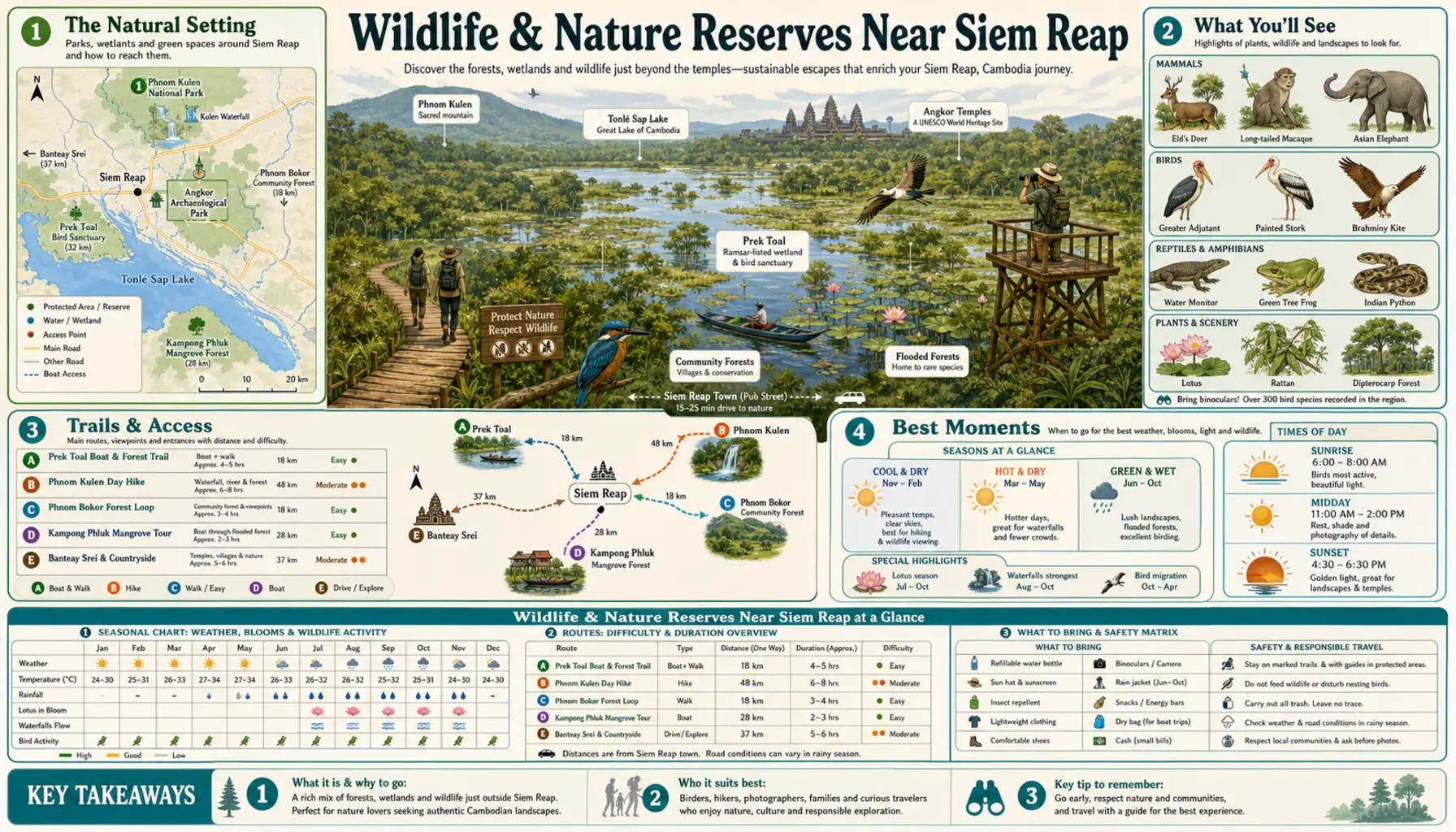
Sometime after first light, from the forest between Angkor Thom and Ta Prohm, comes a rising whoop that most visitors mistake for a bird — pileated gibbons, released into the Angkor park over the past decade and now breeding in the canopy above the causeways. That reintroduction is the short version of what has happened around Siem Reap: a temple forest with wild primates in it again, a waterbird colony on the Tonlé Sap best visited between December and April, and a rescue centre in the countryside north of town that few people bother to drive out to.
Prek Toal and the lake
Prek Toal, the core zone of the Tonlé Sap biosphere reserve, is the largest waterbird colony in Southeast Asia — spot-billed pelicans, milky and painted storks, and the rare greater adjutant nesting in flooded scrub. Getting there is the commitment: a drive out to Chong Kneas or Mechrey, then roughly two hours by boat, usually leaving around 6am and back by early afternoon. Water levels dictate everything, and the birds concentrate as the lake drops, so December to April is the window. Specialist operators, among them the long-running Sam Veasna outfit, run the trips and channel fees back into the villages.
Rescue centres and forest reserves
The Angkor Centre for Conservation of Biodiversity sits at the foot of Phnom Kulen near Banteay Srei, about 45 minutes north, and takes in rescued pangolins, slow lorises, otters and hornbills; visits are by guided tour at a set time each day, so it needs checking before setting out. The Banteay Srey Butterfly Centre is five minutes further on. Phnom Kulen National Park, another half-hour up the escarpment, has waterfalls and dipterocarp forest and charges its own entry fee separate from the Angkor pass. Closer in, the flooded forest at Kampong Phluk is best paddled between about August and November.