Adventure and Outdoor Activities in Kyoto
A visual guide from the Kyoto travel guide — see all posters in Visual Guides.
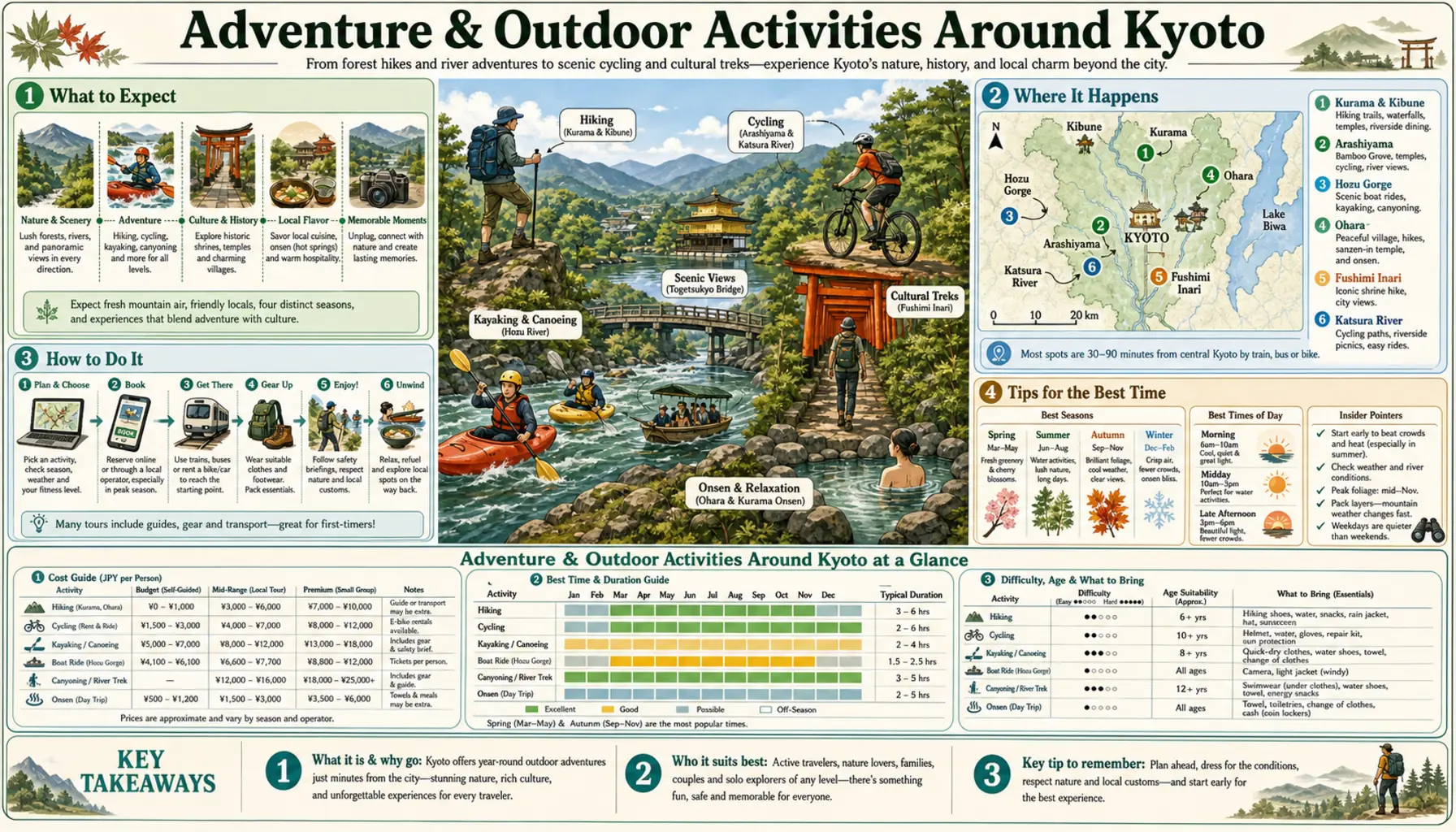
Twenty minutes out of the city the ground folds up into wooded ridges, and the Hozu River drops through a granite gorge in a run of shallow rapids that flat-bottomed boats have been poling down for centuries. Kyoto sells itself on gardens and lantern-lit lanes, but it sits in a basin ringed by mountains on three sides, and most of the trailheads are inside the city bus network. A morning climb, an afternoon on the water and a riverside dinner is a realistic single day here.
Where to go
The Hozugawa Kudari boat trip runs from Kameoka down to Arashiyama and takes roughly two hours, with rafting and kayak operators working the same stretch from Hozukyo. For walking, the Daimonji climb starts behind Ginkaku-ji and reaches the giant fire-character clearing in about forty minutes, with the whole basin laid out below. The Kurama-to-Kibune crossing is the classic half-day: Eizan Railway to Kurama, over the ridge, then down to Kibune's river-deck restaurants. Mount Atago above Kiyotaki is the serious one, four to five hours return with real elevation gain.
How to plan it
Most of this works on ordinary transit. The Eizan Electric Railway leaves from Demachiyanagi for Kurama, and the JR Sagano line reaches Saga-Arashiyama in about fifteen minutes from Kyoto Station, with Hozukyo a couple of stops further on the local. Boat trips usually need booking ahead during autumn colour and often pause after heavy rain. Trail surfaces are earth and tree root rather than groomed path, so proper shoes matter more than the short distances suggest. Summer in the basin is brutally humid, so start early and carry more water than feels sensible; November brings the best colour and the largest crowds together.