Coffee and Cafe Culture in Kyoto
A visual guide from the Kyoto travel guide — see all posters in Visual Guides.
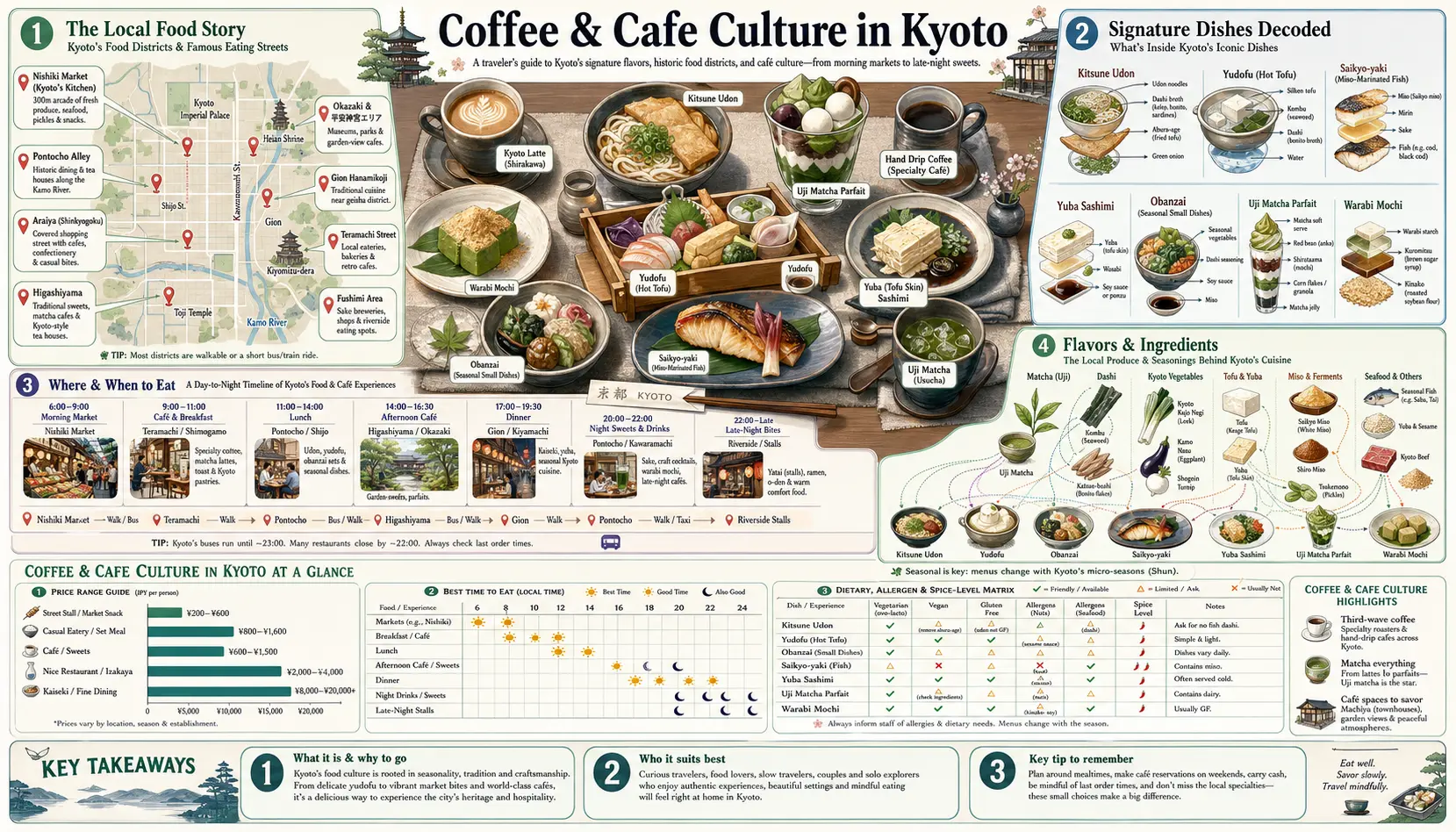
Kyoto households spend more on coffee than almost anywhere else in Japan, and they have done for decades. The proof is on Sakaimachi-dori, where Inoda Coffee has been going since 1940 and its Arabian Pearl blend arrives already mixed with milk and sugar unless you say otherwise, poured around a horseshoe counter of regulars reading newspapers. The same city later produced % Arabica, whose riverside window in Arashiyama now has a queue most mornings. Prewar kissaten and third-wave roasters routinely sit within one block of each other here.
The old kissaten
Inoda's main shop near Sanjo-Sakaimachi is the institution, and the morning set with thick toast and egg is the way to use it. Smart Coffee on Teramachi has been going since 1932 and is known for hotcakes and French toast, with a queue outside by mid-morning at weekends. Rokuyosha near Kiyamachi keeps its basement dark and its hand-made doughnuts unchanged. Maeda Coffee runs a branch inside the old school building that is now the Kyoto Art Center. Expect small rooms, no rush, and a few places that still prefer cash.
Modern roasters
% Arabica opened in Kyoto in 2014, and its Arashiyama counter looking straight at the Togetsukyo bridge is the one people photograph, though the Higashiyama branch is calmer. Weekenders Coffee Tominokoji is a tiny roastery set at the back of a car park behind a small garden frontage, takeaway only. Kurasu near Kyoto Station, Walden Woods in a stripped-white former bank at Gojo, and Clamp Coffee Sarasa down a Nakagyo alley round out the list. For tea instead, Ippodo on Teramachi has traded tea in Kyoto since 1717 and runs a tasting room alongside the shop.