Digital Nomads in Kyoto
A visual guide from the Kyoto travel guide — see all posters in Visual Guides.
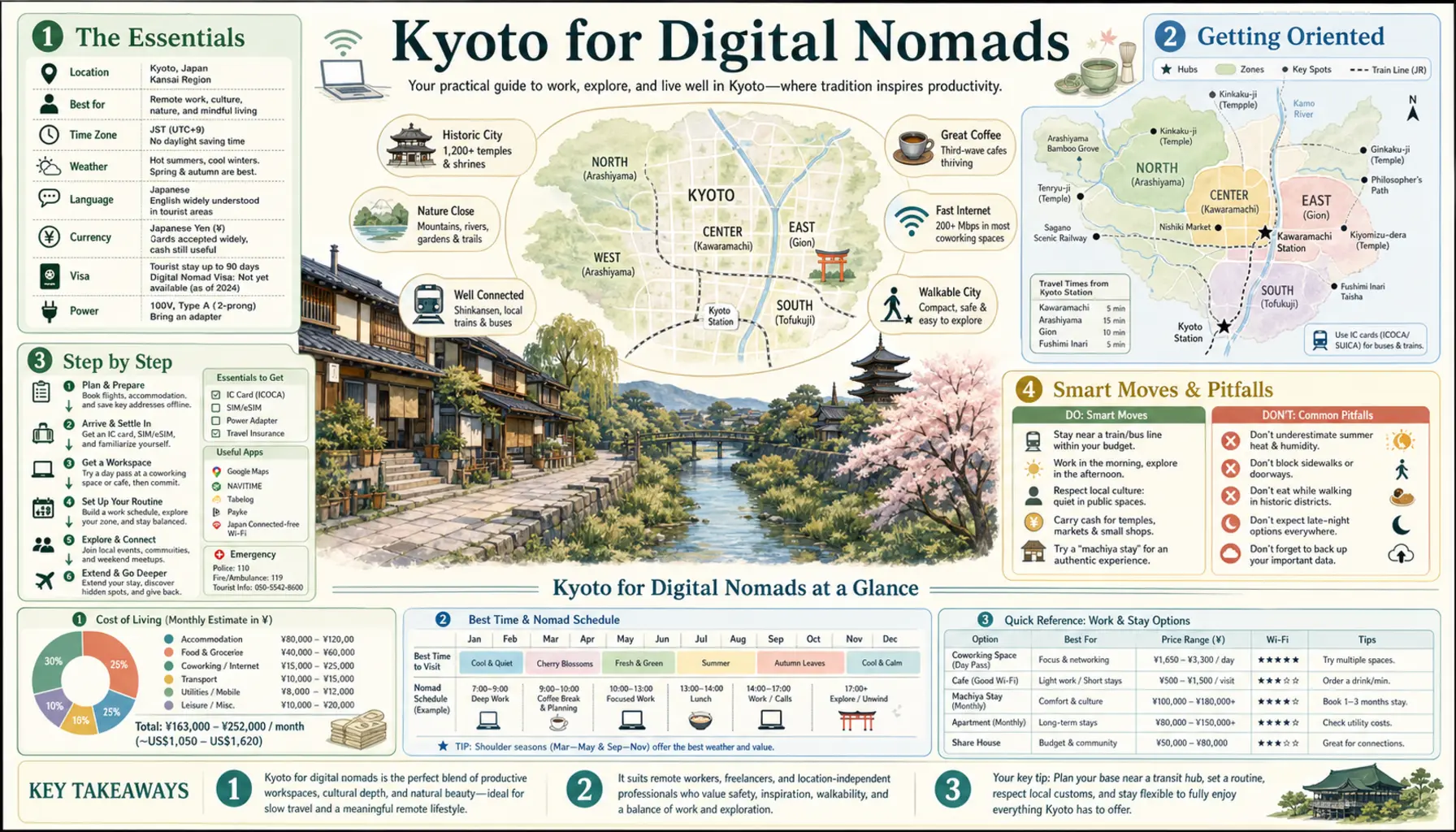
Kyoto is a workable base rather than an obvious one. Connectivity is excellent, convenience-store ATMs take foreign cards, and a monthly furnished room in Sakyo-ku near the university costs a fraction of central Tokyo. The catch is the calendar, because the two months that make the city famous also fill every hotel and coworking desk. The other catch is the building stock: old machiya are beautiful and almost uninsulated, which matters in a February that hovers near freezing and an August that rarely drops below thirty.
Where to work
The Millennials Kyoto near Kawaramachi combines capsule-style rooms with a coworking floor and is the easiest short-stay option. Impact Hub Kyoto occupies a historic residence on the north side of the city and runs a more community-driven membership. Kyoto Research Park near Tambaguchi is the large innovation campus, with drop-in space and a regular events programme. For free or near-free, kokoka Kyoto International Community House in Okazaki has a lounge, wifi, cheap bookable meeting rooms and English-speaking staff used to fielding residency questions; the Kyoto Prefectural Library is a few minutes away in the same cluster.
Living and logistics
Cafes vary on laptops, since small independents often quietly discourage them while chains and station-area places are fine — the Starbucks at Sanjo Ohashi even builds a deck over the river in summer. Kyoto has only two subway lines, so either base yourself near Karasuma or Tozai or plan to cycle everywhere. Japan introduced a six-month digital-nomad residence status in 2024 with an income threshold reported around ten million yen and a private insurance requirement, and eligibility depends on nationality, so check the current rules. JST suits Asia-Pacific hours and punishes European calls.