Handicrafts and Artisan Workshops in Kyoto
A visual guide from the Kyoto travel guide — see all posters in Visual Guides.
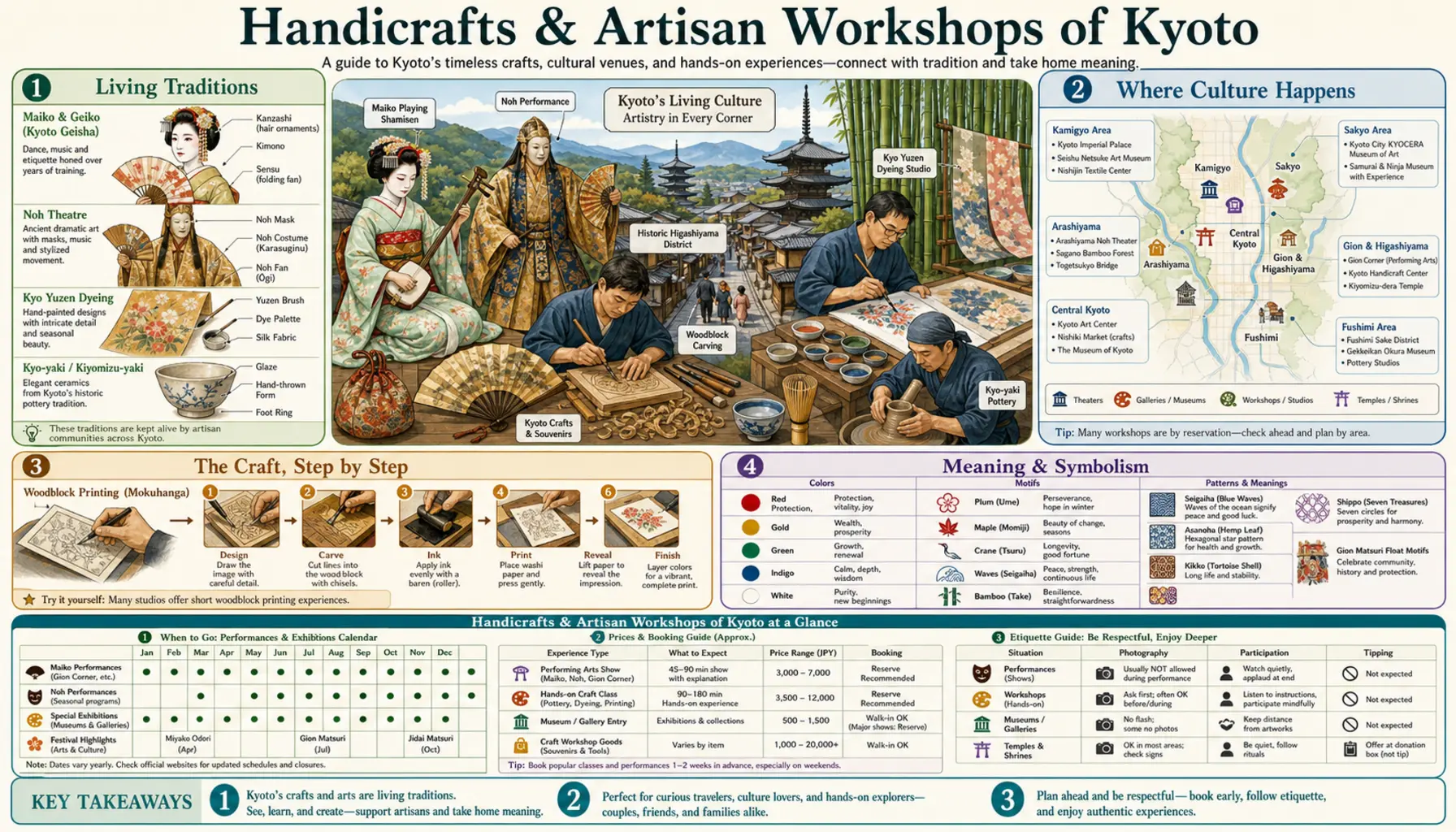
Kyoto still keeps whole trades alive on single streets: the clack of looms in Nishijin, kilns above Gojozaka firing Kiyomizu ware, a fan shop on Rokkaku that has been folding paper since the 1820s, and a workshop near Kawaramachi where a copper tea caddy is rolled, soldered and burnished so precisely that the lid sinks under its own weight. Much of it is visitable, and a good deal of it can be tried — an afternoon of indigo dyeing or woodblock printing is straightforward to arrange.
Where the crafts are
Nishijin, north-west of the centre, is the weaving district; the Nishijin Textile Center runs kimono shows through the day, usually at no charge, and keeps looms working on the shop floor. Pottery clusters on the slopes at Gojozaka and Kiyomizu-zaka, and Kawai Kanjiro's House nearby — the potter's own home, climbing kiln intact — is one of the best small museums in the city. Aritsugu has forged knives in Nishiki Market since the sixteenth century and will grind a name into the blade. Kaikado's workshop and café sit near Kawaramachi-Shichijo, and Miyawaki Baisen-an makes folding fans close to Rokkaku.
Trying it yourself
The Kyoto Museum of Crafts and Design, in the basement of Miyako Messe at Okazaki, is usually free and has artisans demonstrating on rotation — a sensible first stop before committing money. Short workshops in yuzen dyeing, woodblock printing, incense blending and bamboo weaving run all over the city, most lasting one to two hours and typically costing a few thousand yen; the Kyoto Handicraft Center near Heian Shrine takes English bookings and often walk-ins. Uji, half an hour south, adds Asahiyaki pottery and tea grinding. Book a week ahead in spring and autumn.