Historic Towns in Kyoto
A visual guide from the Kyoto travel guide — see all posters in Visual Guides.
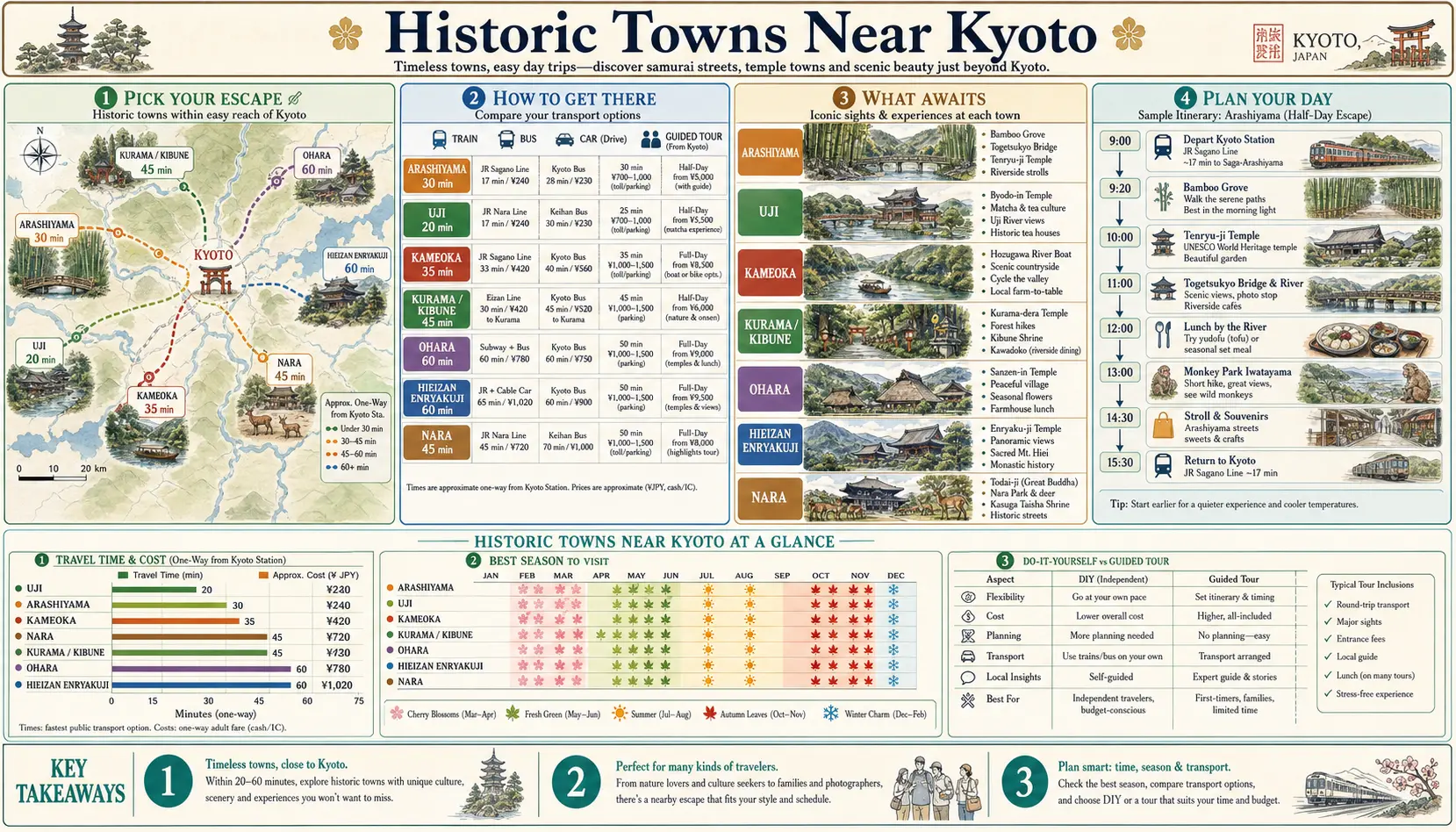
At Ine, on a sheltered bay at the top of Kyoto Prefecture, more than two hundred funaya stand with their ground floors open to the water so a boat can be pulled straight in underneath the house. It is the better part of three hours from the city and looks nothing like it. Kyoto Prefecture is long, and the towns strung along it — tea merchants at Uji, sake brewers at Fushimi, thatched farmhouses at Miyama — make better day trips than most people expect from a city visit.
Close to the city
Uji is twenty minutes south on the JR Nara Line or the Keihan branch: a fast green river, the Byodo-in phoenix hall familiar from the ten-yen coin, and a street of tea shops where matcha is still stone-ground on site. Fushimi, ten minutes out, keeps whitewashed brewery walls and a willow canal. Within the city limits, Sannenzaka and Ninenzaka preserve the old stepped approach to Kiyomizu, Saga-Toriimoto has thatched shopfronts on a country lane, and Gion Shinbashi's canal frontage is the tidiest surviving block of machiya in Kyoto.
Further out
Miyama's Kayabuki-no-Sato, roughly ninety minutes north by bus via Nantan, is a working hamlet of about forty thatched farmhouses with a small folk museum and one very good soba place. Amanohashidate, a three-kilometre pine sandbar across a lagoon, takes about two hours by limited express from Kyoto Station, and Ine is a further bus ride beyond it — an overnight makes far more sense than a day return. East, in Shiga, Omihachiman's merchant canals and Hikone's intact castle keep are both under an hour on the JR Biwako Line.