Packing and Seasons Guide in Kyoto
A visual guide from the Kyoto travel guide — see all posters in Visual Guides.
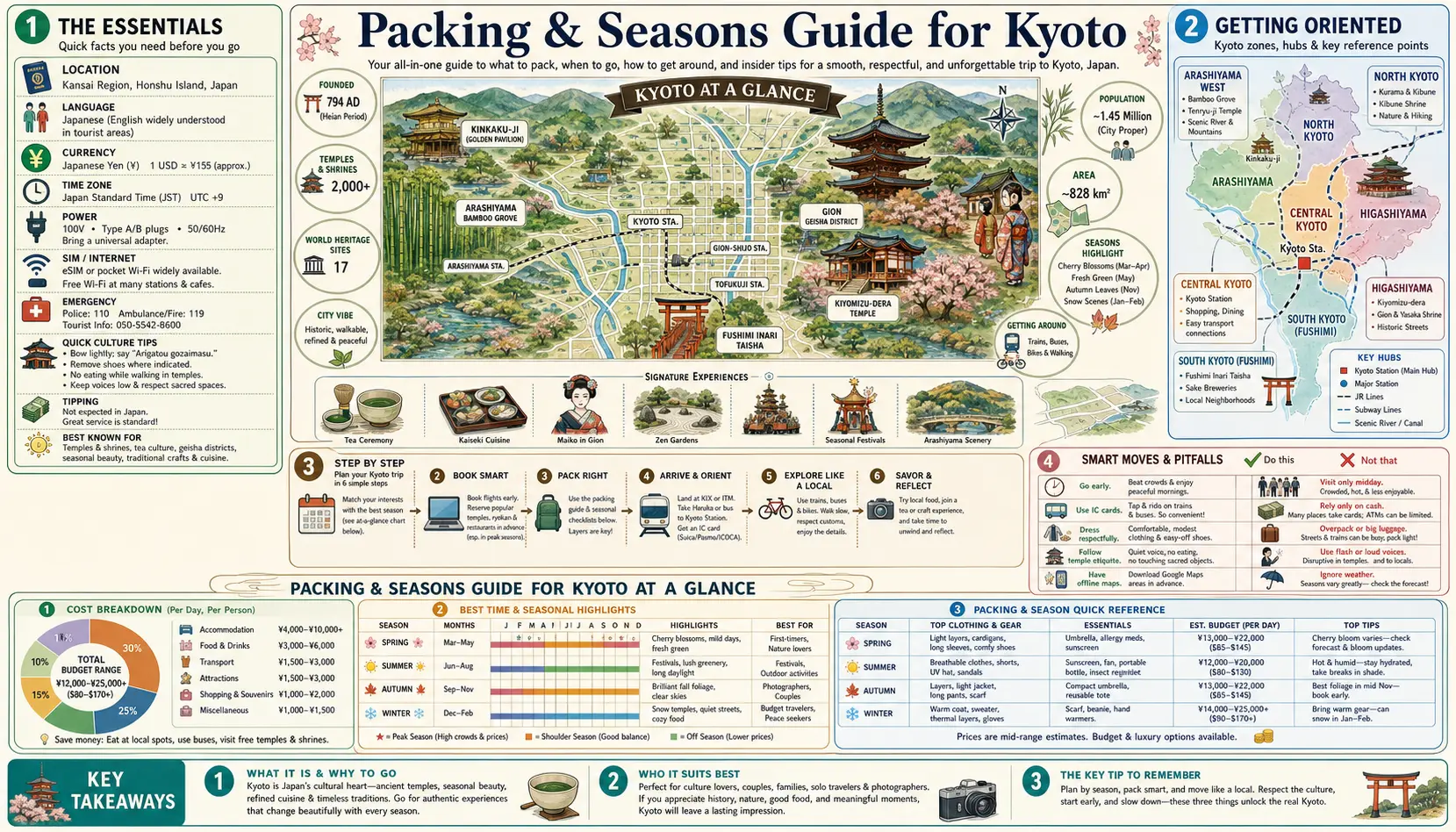
Kyoto sits in a basin ringed by low mountains, which does something specific to its weather: heat and humidity settle in and do not move. August afternoons run past 35°C with the air barely stirring, while January mornings hover near freezing and temple halls, being wooden and open, feel colder inside than out. Between those extremes the city is very good indeed. The two things that decide a trip here are the calendar — blossom, rain, colour, festival — and footwear, because most days involve fifteen thousand steps on stone.
The seasons, honestly
Late March to early April brings cherry blossom and the year's heaviest crowds; the bloom typically peaks in the first days of April but shifts by a week either way. May is arguably the best month — warm, dry, green. The tsuyu rainy season runs roughly mid-June to mid-July, humid with long grey spells rather than constant downpour. July and August are hot and festival-heavy, with typhoon risk into September. Mid-November to early December is autumn colour, as busy as spring. January and February are cold, quiet and cheap, with occasional snow that transforms the northern temples for about a day.
What to bring
Shoes matter most: broken-in walking shoes that slip on and off easily, since temples, ryokan and many restaurants require removing them, plus socks worth being seen in. Layers beat a single heavy coat — a thin inner shell for unheated halls in winter, a light long sleeve for summer sun and over-air-conditioned trains. A compact umbrella earns its space from June onward, though convenience stores sell them everywhere. In summer a folding fan and a cooling towel are genuinely used by locals. Coin lockers at Kyoto Station fill early, so takuhaibin luggage forwarding between hotels is worth considering — usually next-day and inexpensive.