Palaces and Royal Architecture in Kyoto
A visual guide from the Kyoto travel guide — see all posters in Visual Guides.
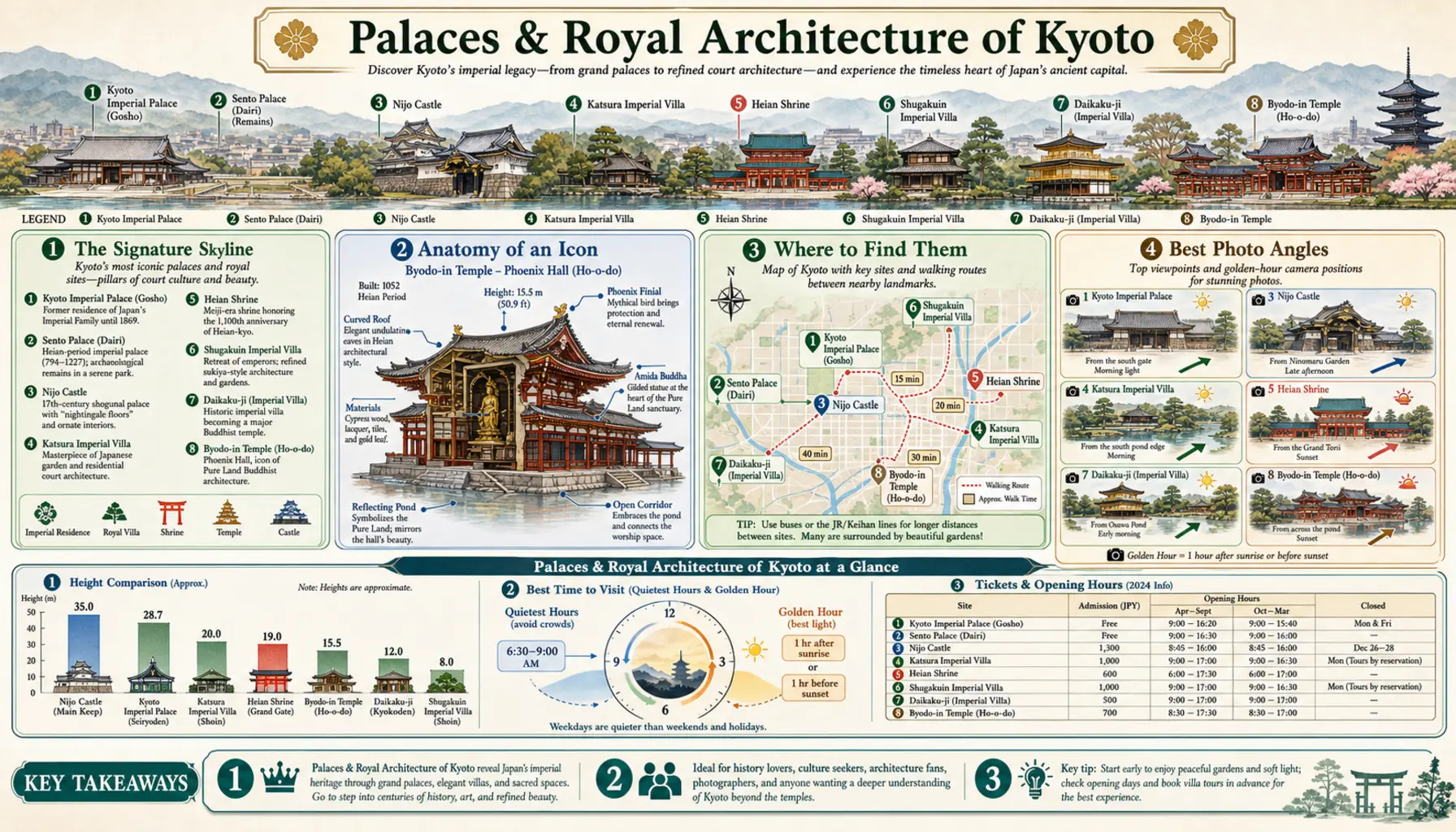
The corridor floor of Ninomaru Palace, inside Nijo Castle, chirps underfoot with every step — a deliberate nightingale mechanism of iron clamps rubbing against nails, built so nobody could approach the shogun quietly. Beyond it the rooms open one into the next behind gold-leaf screens painted by the Kano school, each hall a rung in a strict hierarchy of who was allowed how far in. Kyoto's palace architecture divides into two moods: this sort of shogunal display, and the pared-back imperial villas that European modernists later treated as a founding text.
Nijo Castle and the Imperial Palace
Nijo Castle sits directly above Nijojo-mae station on the Tozai subway line and takes about ninety minutes: Ninomaru Palace first, then the moated inner grounds and a garden that peaks in early April. Photography inside the palace rooms is not allowed. A twenty-minute walk north-east, Kyoto Gyoen is a vast gravel park open at all hours with the Imperial Palace enclosure inside it; the standard visitor route has been free and walk-in without reservation for several years now, though carrying a passport is sensible. Sento Imperial Palace, in the same park, still requires an advance booking.
The villas architects come for
Katsura Imperial Villa, out west near the Katsura river, is the one design students travel for: a stepped arrangement of three linked pavilions in shoin style, raised on posts, with sliding walls that frame the garden in deliberate sequences. Bruno Taut wrote about it in the 1930s and it has shaped modernist thinking about Japanese space ever since. Shugakuin, in the north-eastern hills, is the other — three terraced gardens using the mountains as borrowed scenery, with a long walk between them through working rice fields. Both are run by the Imperial Household Agency and need booking ahead, often weeks in high season.