Seasonal Highlights in Kyoto
A visual guide from the Kyoto travel guide — see all posters in Visual Guides.
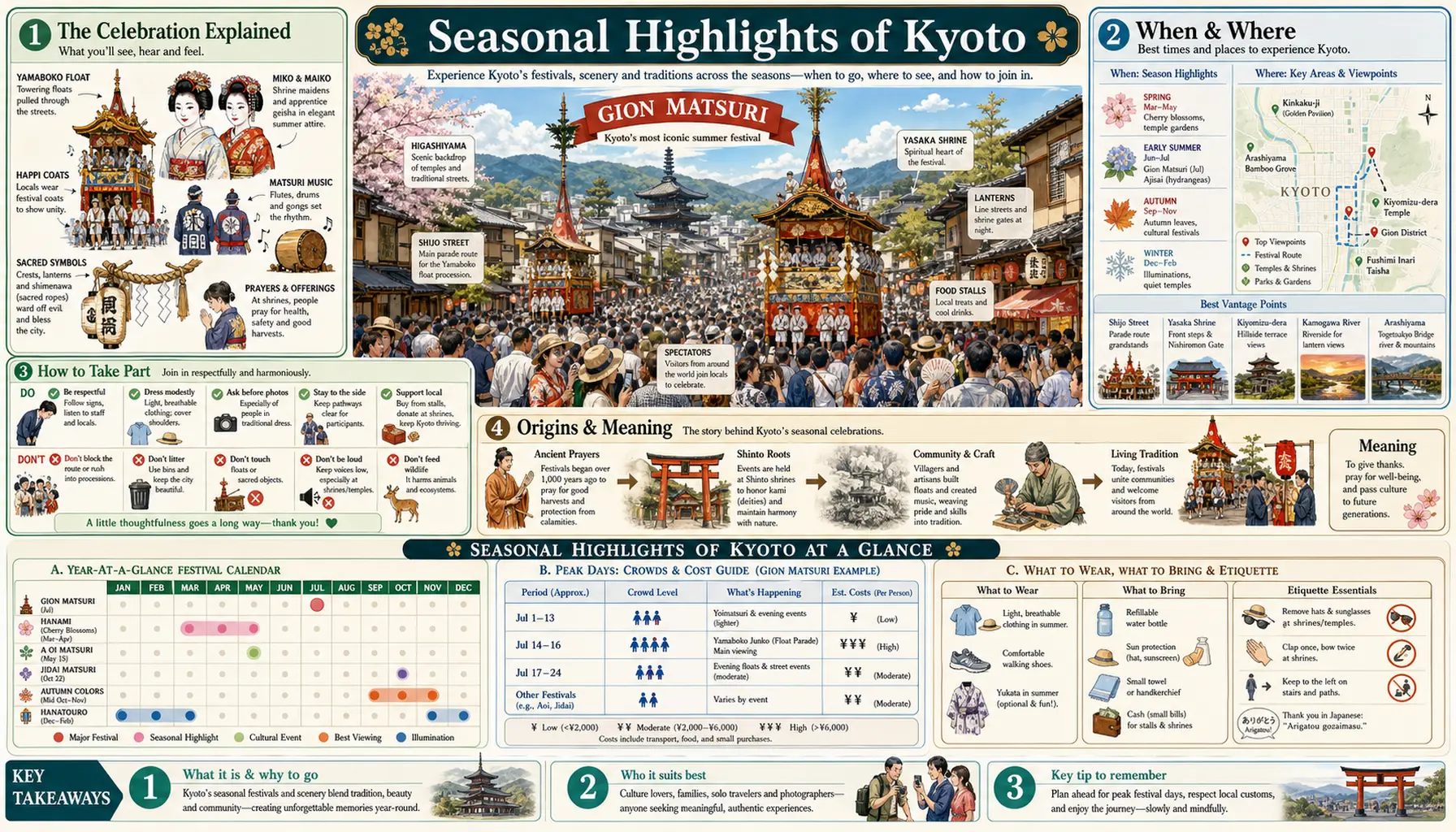
On 16 August, five characters and shapes are lit in fire on the mountainsides ringing Kyoto — the Gozan no Okuribi — and the whole city walks out to the river bridges to watch them burn for half an hour. That is the sharpest example of a calendar that dictates almost everything here: when hotels cost triple, when the maples turn, when float-builders block the streets of the old merchant quarter. Choosing dates matters more in Kyoto than in most cities, and the differences between months are large.
Spring and summer
Plum blossom opens at Kitano Tenmangu in late February, a quieter warm-up. Cherry blossom typically peaks in the first week of April; the Keage Incline's disused rail bed, the Botanical Gardens and the Kamo banks are less crushed than Maruyama Park. Aoi Matsuri on 15 May sends a Heian-costumed procession from the Imperial Palace up to Kamigamo. The river terraces open in May and run through summer. All of July is Gion Matsuri — the yamaboko floats are assembled in the streets around Karasuma, the yoiyama evenings from the 14th to the 16th close roads for street food, and the great parade falls on the 17th.
Autumn and winter
Autumn colour arrives later than most visitors expect: mid-November to the first week of December, usually peaking around the third week. Tofukuji's bridge over a valley of maples is the postcard and is rationed by queue; Eikando, Ruriko-in and the Eizan line's tunnel north of the city are the other heavyweights. Jidai Matsuri on 22 October is the costume-history parade. From January the city empties, room rates drop and the light turns clear and low; snow over Kinkakuji or Kurama happens a handful of times a winter and usually clears by afternoon. February is the cheapest month to be here.