Shopping Districts in Kyoto
A visual guide from the Kyoto travel guide — see all posters in Visual Guides.
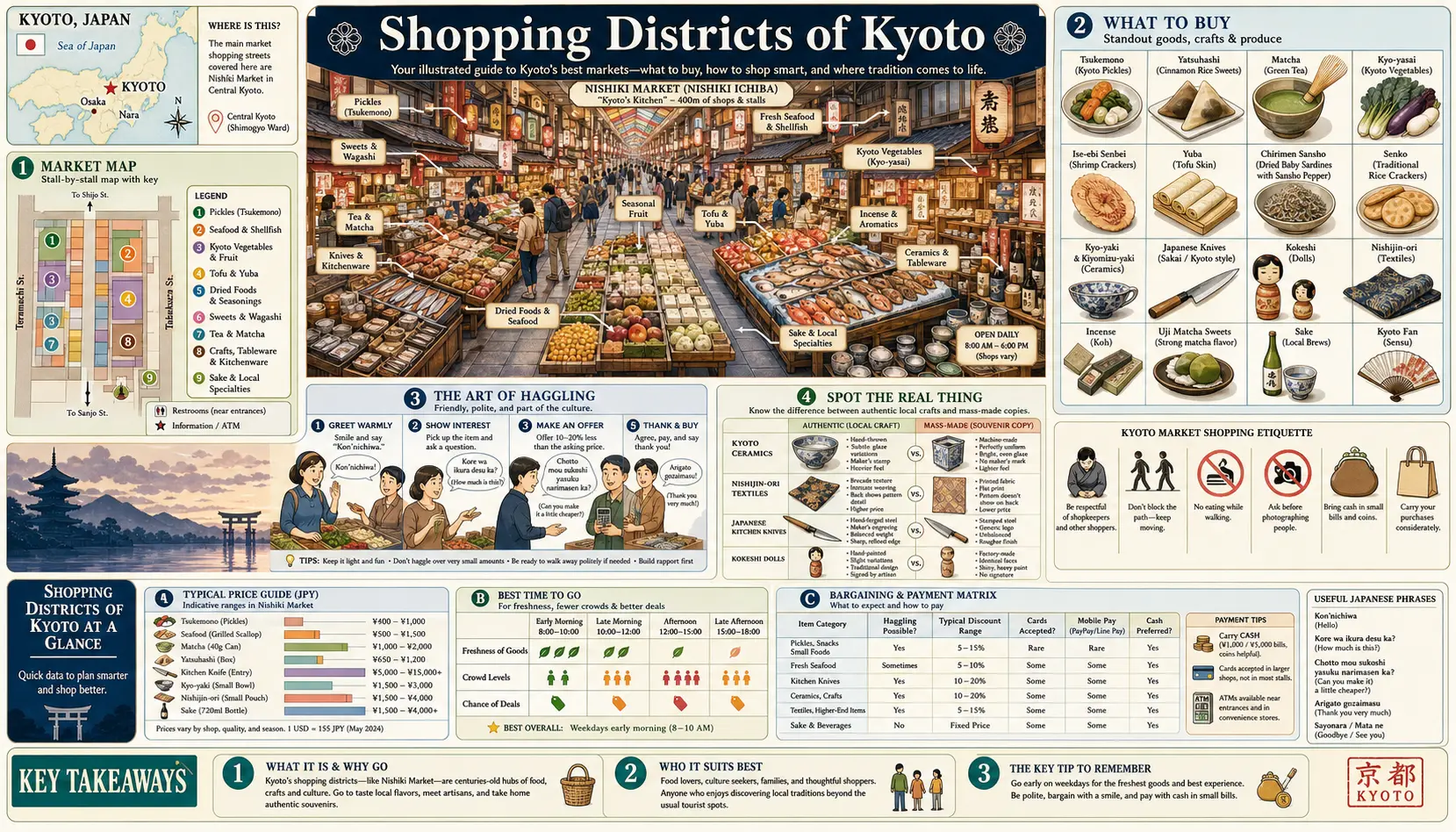
Shijo-dori between Karasuma and Kawaramachi is barely a kilometre long and carries most of Kyoto's retail weight: Daimaru anchoring the Karasuma end and Takashimaya the Kawaramachi end, the Fujii Daimaru and BAL buildings in between, and a stream of people crossing at the Shijo-Kawaramachi junction from morning until late. One block north the register changes completely — Nishiki Market's food lane, then the covered Teramachi and Shinkyogoku arcades, then shops two centuries old selling incense, tea and hand-forged knives to the same families as always.
The Shijo and Kawaramachi core
Takashimaya's T8 extension, opened in 2023, put the city's biggest Nintendo, Pokémon and Jump stores on consecutive floors and drew a completely different crowd to a district that used to be mostly kimono and cosmetics. Kyoto BAL holds the large Maruzen bookshop in its basement; Fujii Daimaru leans younger and streetwear-heavy. On Karasuma, Shinpuhkan — a 1926 telephone exchange reworked by Kengo Kuma into a planted courtyard of shops, food and a hotel — is the best-looking retail building in town. Both major department stores have deep basement food halls, and tax-free counters are standard with a passport.
Craft shops and other districts
For things made in Kyoto, Teramachi holds Kyukyodo for incense and Ippodo for tea, both several centuries old and still unfussy; Aritsugu in Nishiki Market sells the carbon-steel knives professional kitchens use and will engrave a name in a few minutes. Kaikado's hand-made tea caddies come from a small workshop near Kawaramachi-Shichijo. Elsewhere: Kyoto Station has Isetan plus the Porta and Cube underground malls, useful in rain; Kitayama runs to design boutiques and cafés; and Ichijoji on the Eizan line has Keibunsha, regularly called one of the best bookshops in Japan.