Tea Houses and Traditional Drinks in Kyoto
A visual guide from the Kyoto travel guide — see all posters in Visual Guides.
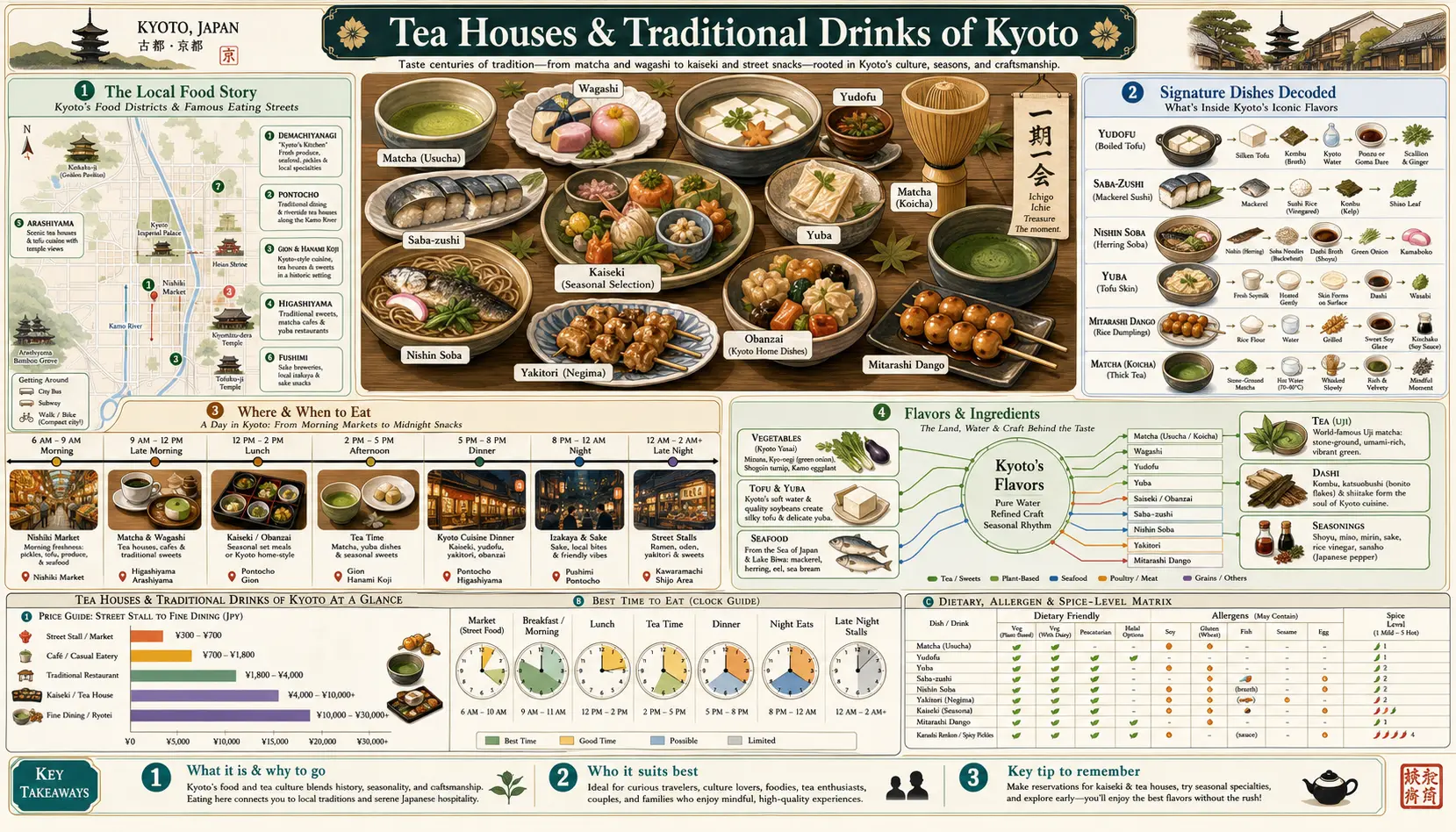
Kyoto's water is soft and low in minerals, and it is the reason two industries settled here: tea in Uji to the south, sake in Fushimi where the wells run through sand and gravel. The result is a city where a bowl of thick koicha, a pot of roasted hojicha and a chilled glass of junmai are all local products with an address attached. You can spend an hour on a formal sitting with a whisk and a sweet, or ten minutes standing at a tasting counter in a brewery warehouse. Both are the real thing.
Tea houses to try
Ippodo on Teramachi has been selling leaf since 1717 and runs the Kaboku tearoom beside the shop, where staff brew the first cup and leave you the pot for a second. Marukyu Koyamaen's Motoan, a few blocks west of Karasuma on Nishinotoin, is quieter and more serious about matcha grades. In Uji, Nakamura Tokichi's main shop, a converted tea-merchant house near the station, does the well-known matcha jelly and soba, usually with a wait, and its Byodo-in branch adds the river view; the municipal Taiho-an offers a short, inexpensive sitting aimed squarely at visitors. In Gion, Kagizen Yoshifusa is the old-school choice, serving kuzukiri noodles in dark syrup, cut to order.
Beyond matcha
Hojicha, roasted until it smells faintly of caramel, is the everyday Kyoto cup and travels home better than matcha. Kyo-bancha, smoked over a fire, is the acquired taste worth trying once. In Fushimi, twenty minutes south by train, the Gekkeikan Okura Sake Museum walks through the old cellars and finishes with a small tasting, and Kizakura's brewery nearby has a restaurant attached. A few small breweries still work inside the city itself, among them Kinshi Masamune, whose Horino Memorial Museum in Nakagyo keeps its original well beside the shop. Expect a tea sitting to cost roughly what a decent lunch does, and reserve ahead for anything billed as a full ceremony.