Coffee and Cafe Culture in Bangkok
A visual guide from the Bangkok travel guide — see all posters in Visual Guides.
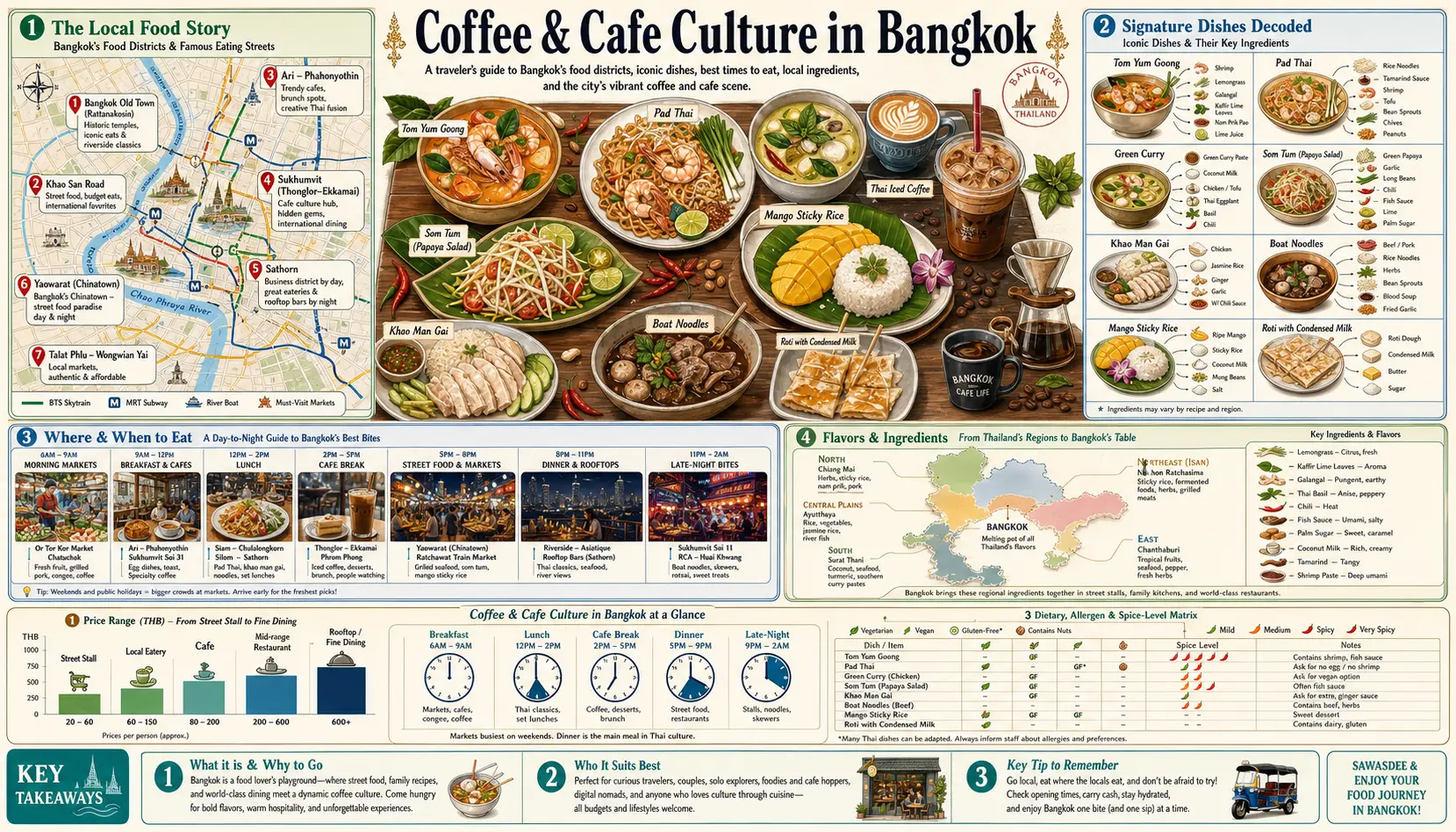
Bangkok went from sweet iced oliang poured into a plastic bag to competition-grade filter coffee in about fifteen years, and both still exist a block apart. The domestic supply chain did most of the work, as washed and natural lots from Doi Chang, Doi Tung and the Chiang Rai highlands now hold their own on menus that once ran entirely on imports. The result is a city where a well-made single-origin pour-over usually costs somewhere between 90 and 160 baht, served in a converted shophouse with the air conditioning turned up slightly too high.
Neighbourhoods to browse
Ari, one BTS stop north of Victory Monument, is the easiest concentration: a grid of quiet lanes with roasters, brunch spots and plant-filled courtyards within a few minutes of each other. Ekkamai and Thonglor cover the design-led end, where Roots at The Commons is a reliable benchmark and several cocktail bars pull espresso by day. Charoen Krung and Talat Noi fold specialty roasting into old shophouses, with Sarnies occupying a beautifully wrecked building off Charoen Krung Soi 44. For a single stop between museums, Gallery Drip Coffee sits on the ground floor of the BACC beside the exhibition halls.
How to order
Ask what is on filter rather than defaulting to a flat white, because the interesting Thai lots are usually on the brew bar and staff at places like Factory Coffee on Phaya Thai Road will happily talk through the roast. Iced drinks are the norm here and are no insult to the coffee; a batch-brewed iced black with a citrus note is the local house style. Most cafes open around eight and close by six, and the mid-afternoon laptop crowd fills the sockets, so mornings are better if you want a seat. Bags of Thai beans are good value to carry home.