Handicrafts and Artisan Workshops in Bangkok
A visual guide from the Bangkok travel guide — see all posters in Visual Guides.
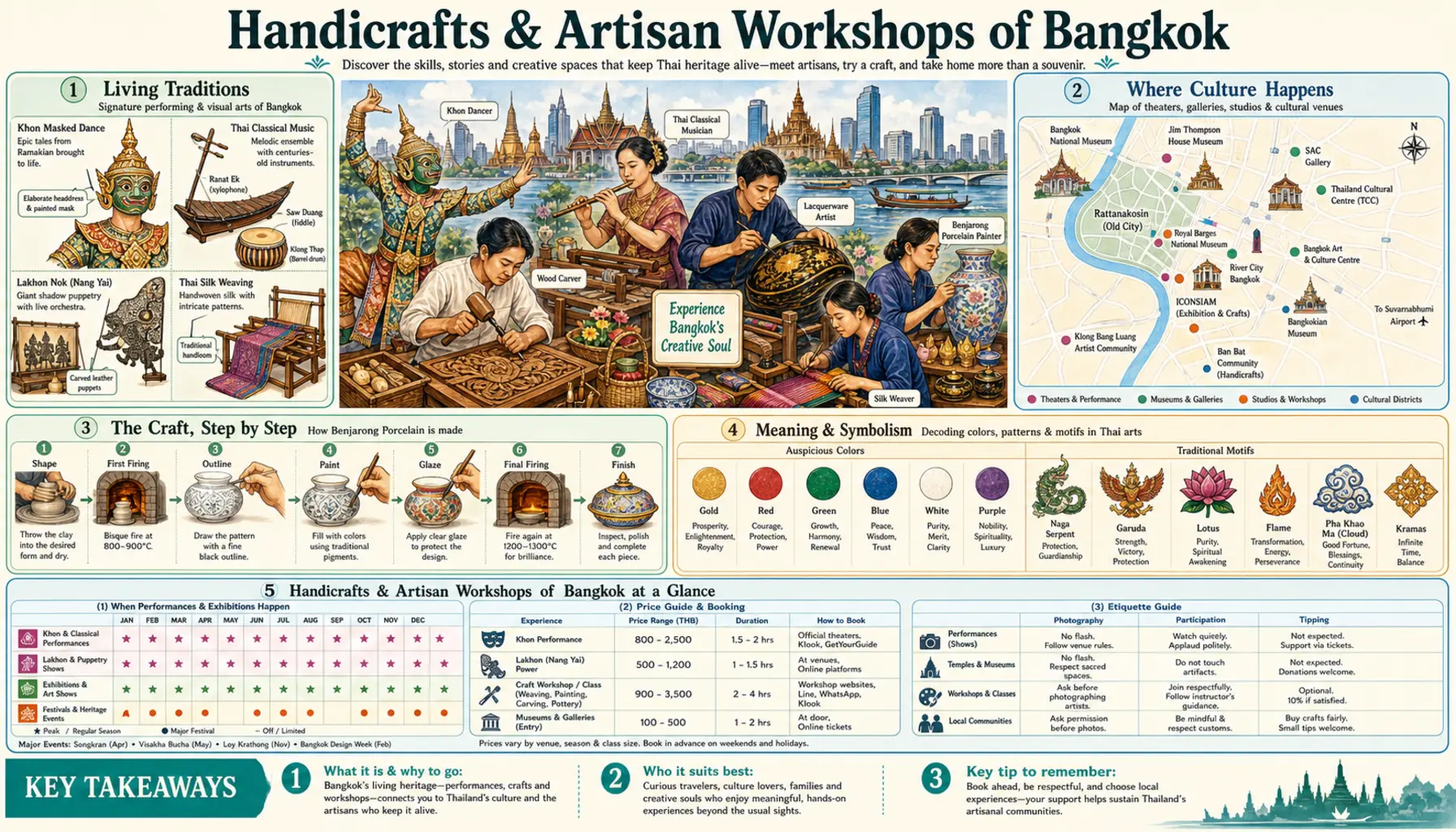
In a lane behind Wat Suwannaram in Thonburi, a handful of men still hammer bronze bowls by hand, and the sound carries down the alley well before the workshop comes into view. Ban Bu has been beating alloy into singing bowls for generations and is now down to a single family operation. Bangkok's craft life survives in pockets like this: silk looms beside a canal, potters working unglazed clay on a river island, metalworkers rebuilding engines in Talat Noi — usually a short walk from a rail line and almost never signposted.
Workshops to visit
Ban Bu, off Charoen Sanitwong in Thonburi, lets visitors watch bronze bowls raised, hammered and polished, though it is a working shop rather than a museum, so hours are informal and a weekday morning works best. Ban Krua, the Cham Muslim community strung along Khlong Saen Saep, still keeps a few hand looms weaving the silk that made Jim Thompson's name; the Jim Thompson House and its newer art centre sit a few minutes away near BTS National Stadium. On Ko Kret, Mon potters work earthenware in open sheds along the island path, selling straight off the kiln shelves.
Where to buy
Chatuchak's craft sections, roughly zones seven and eight, carry ceramics, textiles and woodwork at fair weekend prices and are calmest before ten in the morning. For contemporary Thai design, the Thailand Creative and Design Center in the old Grand Postal Building on Charoen Krung has a shop and rotating exhibitions, with Warehouse 30 a few doors along. Phahurat and Sampeng Lane supply fabric, trims and beads by the roll to the entire city. Market prices are negotiable within reason; workshop pieces generally are not, and tend to be better value than they first look.