Royal Dynasties and Rulers in Bangkok
A visual guide from the Bangkok travel guide — see all posters in Visual Guides.
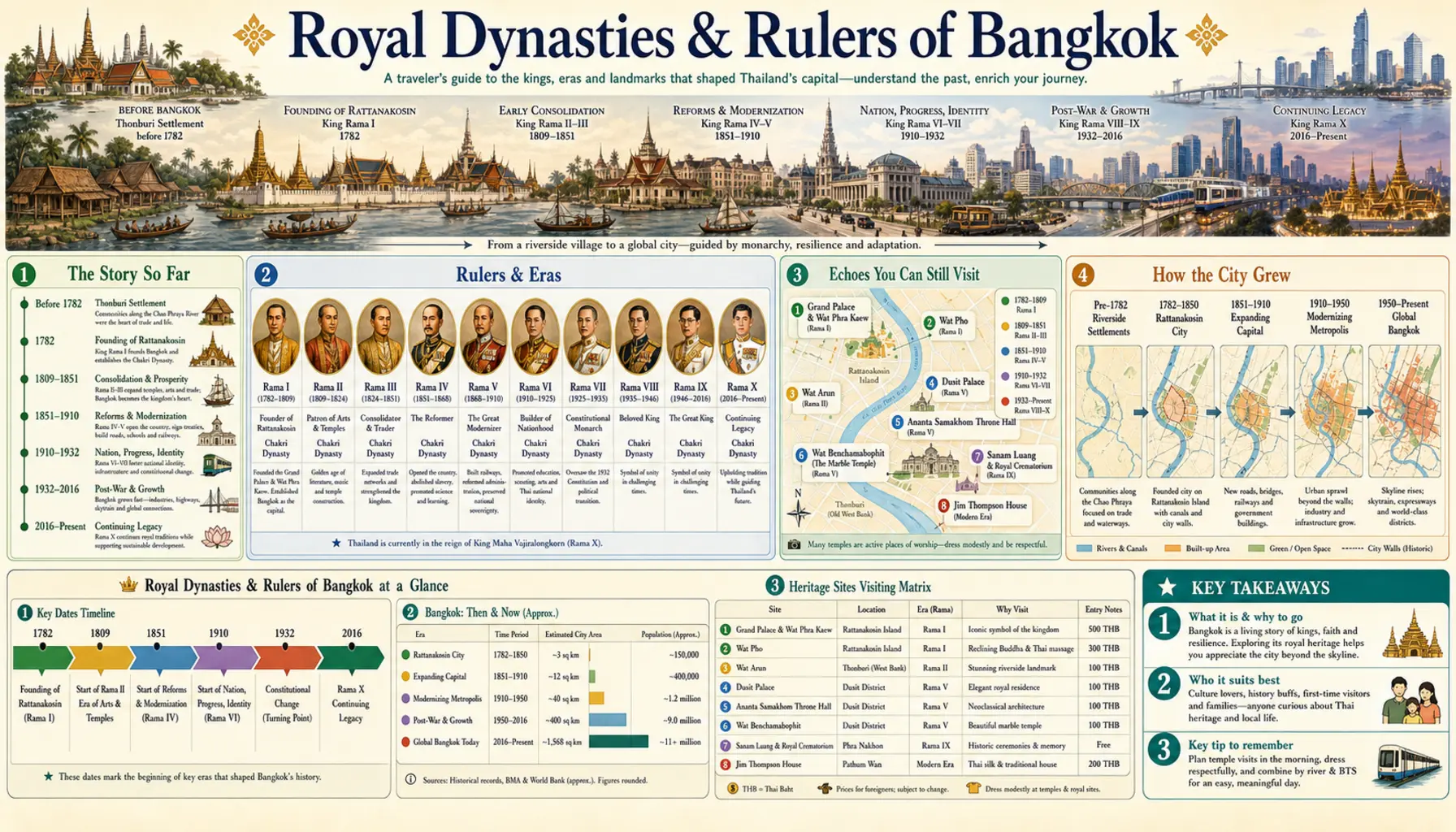
Bangkok is barely 250 years old as a capital. In 1782 Rama I moved the court across the river from Thonburi, walled off an island of canals at a bend in the Chao Phraya, and began a palace compound that every later reign added to — which is why the Grand Palace reads as a collage, Thai tiered roofs sitting on top of Italian Renaissance stonework on the same building. Follow the Chakri kings through their architecture and you get the country's whole nineteenth-century pivot towards Europe in an afternoon's walk.
Where to see it
The Grand Palace on Na Phra Lan Road is the obvious start, and the building to look at properly is the Chakri Maha Prasat, finished in 1882 with European stonework below and three Thai spired roofs above after the court objected to a dome. Two kilometres north, the Dusit district was Rama V's deliberate break with the old walled island: broad boulevards, an equestrian statue on Royal Plaza, and the Ananta Samakhom Throne Hall in Carrara marble. MRT Sanam Chai or the Chao Phraya express boat to Tha Chang put you at the palace gates; public access to some Dusit buildings has come and gone, so check before making the trip.
Context and conduct
What the palaces leave out sits in two collections close by. The Bangkok National Museum, in the deputy king's old Front Palace across Sanam Luang, keeps the regalia, thrones and the towering royal funeral chariots, and needs a couple of unhurried hours. The Royal Barges National Museum, in a boat shed off Khlong Bangkok Noi, puts the gilded ceremonial hulls at arm's length; Suphannahong, said to be carved from a single teak trunk, still rows in river processions. Practically: Grand Palace dress codes are enforced at the gate — covered shoulders and knees, nothing sheer. The monarchy is taken seriously in Thailand and public criticism carries legal risk, so keep the tone measured.