Seasonal Highlights in Bangkok
A visual guide from the Bangkok travel guide — see all posters in Visual Guides.
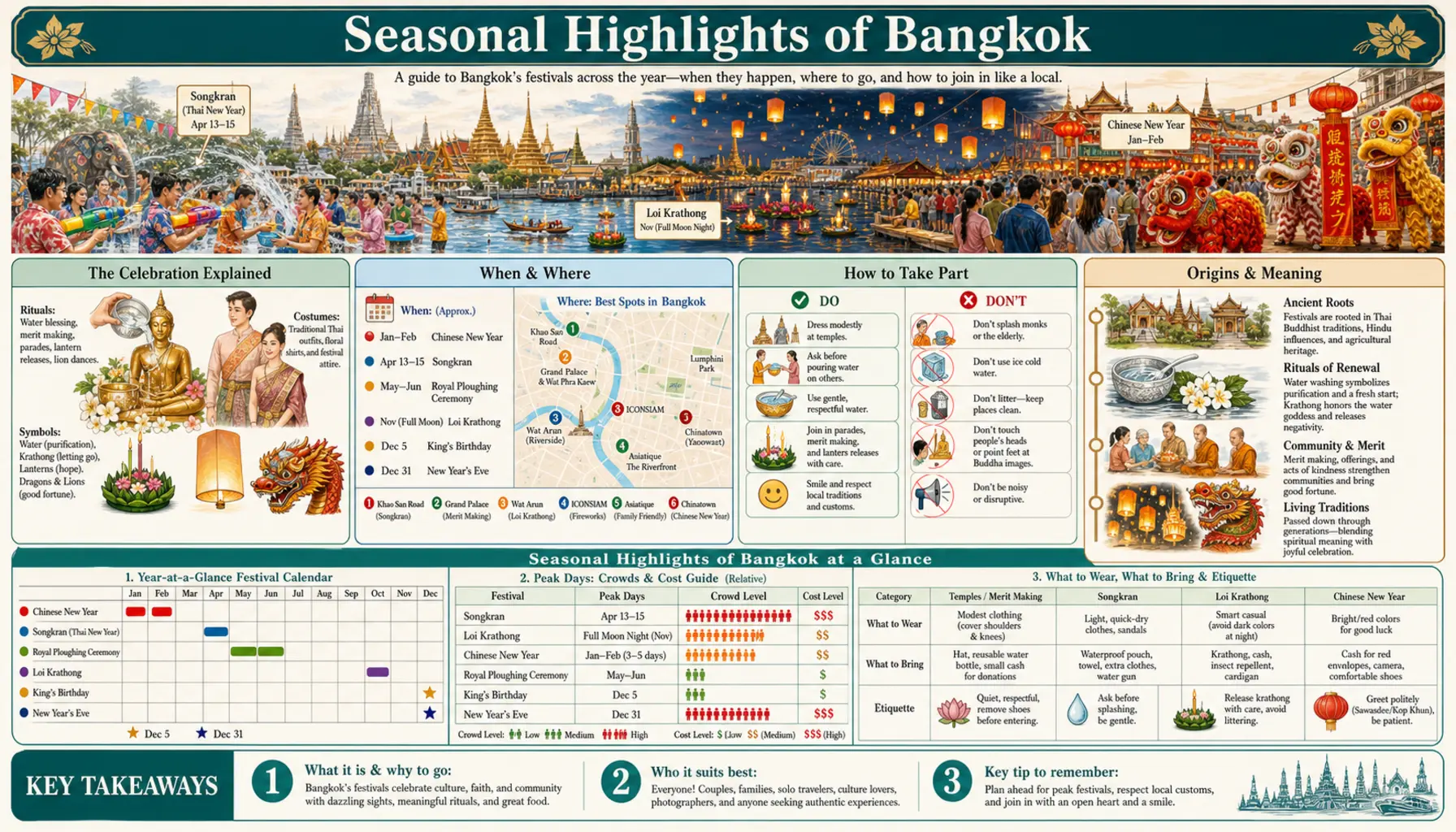
For roughly six weeks from late November the humidity finally breaks, evenings settle somewhere around 24°C, and the whole city moves outdoors — rooftop tables sell out, Lumphini fills with runners after dark, and the riverside markets stay busy past midnight. That window is short. By March the heat is building towards April, when afternoons regularly pass 38°C and Bangkok half empties for Songkran. Then the rains arrive, usually dropping an hour of water at a time onto streets that flood fast and drain slowly.
Month by month
November to February is the cool dry season and the best of it, though December and January are also the busiest and priciest — book rooms and rooftop tables ahead. March to May is genuinely hot, peaking around Songkran in mid-April. June to October is the southwest monsoon: rain typically arrives as a heavy late-afternoon burst rather than all-day drizzle, September and October are the wettest, and hotel rates fall accordingly. One caveat for the dry months — regional agricultural burning pushes fine-particulate haze over the city from roughly January to March, so an air-quality app is worth having on your phone.
What to time it with
Songkran, 13–15 April, turns Silom, Khao San and RCA into open-air water fights; much of the rest of the city shuts for the holiday. Loy Krathong falls on the November full moon and is best on the river, around ICONSIAM, Asiatique or the Rattanakosin piers. Chinese New Year, late January or February, closes Yaowarat Road to traffic for lion dances and food stalls, and the same district runs the vegetarian festival with its yellow flags in September or October. Bangkok Design Week, usually February, opens shophouses and installations across Charoenkrung and Talat Noi. Lunar dates shift annually — confirm before booking.