Staying Safe in Bangkok
A visual guide from the Bangkok travel guide — see all posters in Visual Guides.
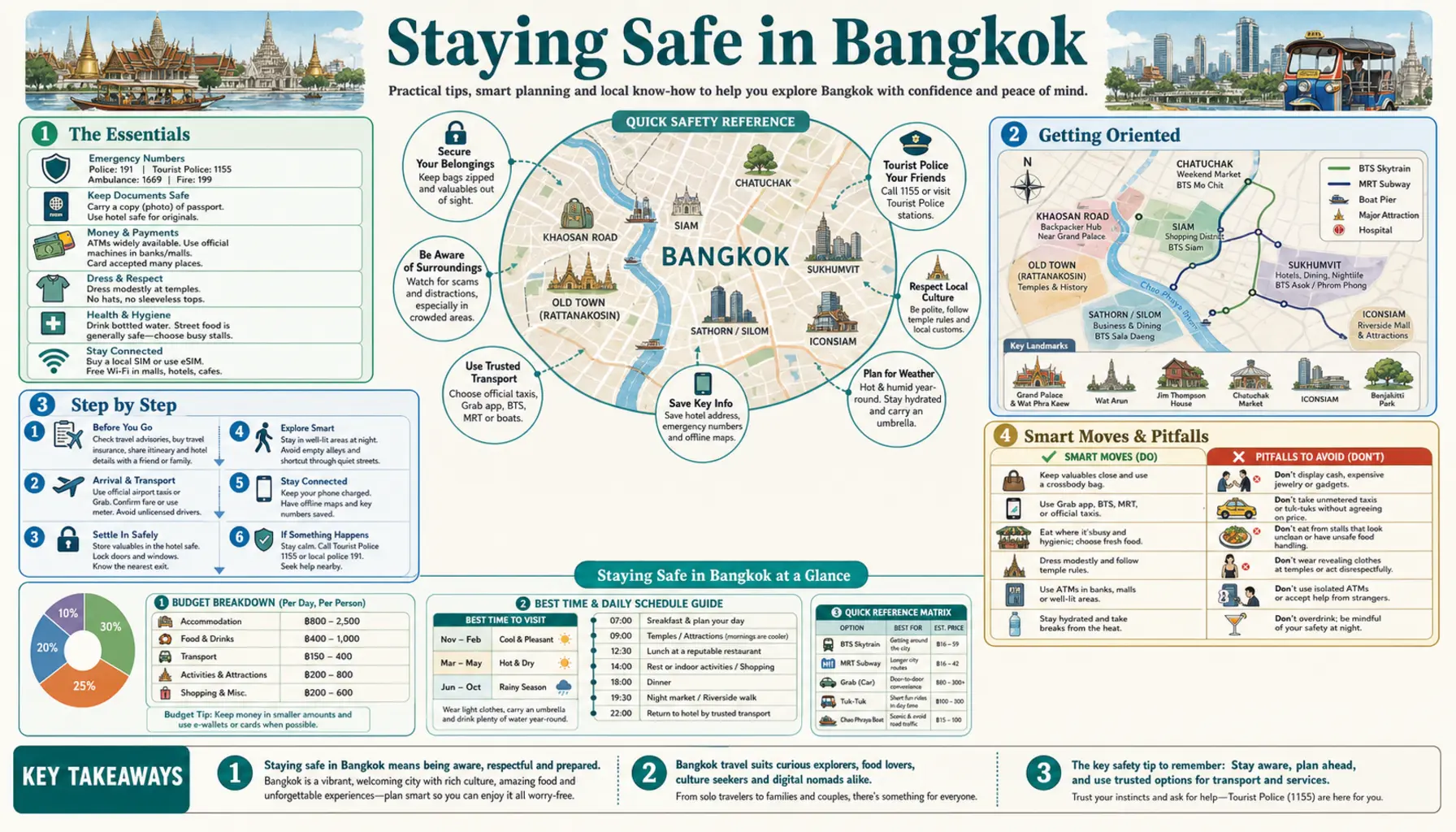
Bangkok is a city where you can walk back from a Thonglor bar at two in the morning and the worst thing likely to happen is a motorbike coming up the pavement behind you. Violent crime against visitors is rare, and street food will not hurt you. What actually catches people out is duller: the tuk-tuk driver who says the Grand Palace is shut for a private ceremony, the taxi that will not run its meter, an unhelmeted scooter ride down Sukhumvit, and the dry-season haze that greys the skyline from January to March.
Scams and money
The classic runs near the Grand Palace and Wat Pho: a friendly, well-dressed stranger says the site is closed for a ceremony and offers a cheap tuk-tuk tour, which ends at a gem or tailor shop. Walk on and check at the official gate. In taxis, insist on the meter or simply use Grab or Bolt so the fare is agreed in advance. Photograph any rented scooter or jet-ski from every angle before riding it. Foreign-card ATM withdrawals carry a per-transaction fee — roughly 220 baht is typical — so take out larger amounts less often and decline the machine's own currency conversion. Around Nana, Soi Cowboy and Patpong, watch your drink and query bar bills before ordering.
Health and traffic
Traffic is the genuine hazard. Cross at lights or footbridges, and assume motorbikes will use the pavement and ride against the flow. If you take a motorbike taxi, ask for the spare helmet. Street food is generally safe and the ice is factory-made, though the usual caution about anything sitting lukewarm applies. Use repellent, particularly in the wet season, since dengue is present in the city. Between January and March check an air-quality reading and consider a mask on the worst days. Tourist Police answer in English on 1155, general emergencies are 191 and ambulance 1669; Bumrungrad, Samitivej and BNH hospitals deal with foreign insurance every day.