Tea Houses and Traditional Drinks in Bangkok
A visual guide from the Bangkok travel guide — see all posters in Visual Guides.
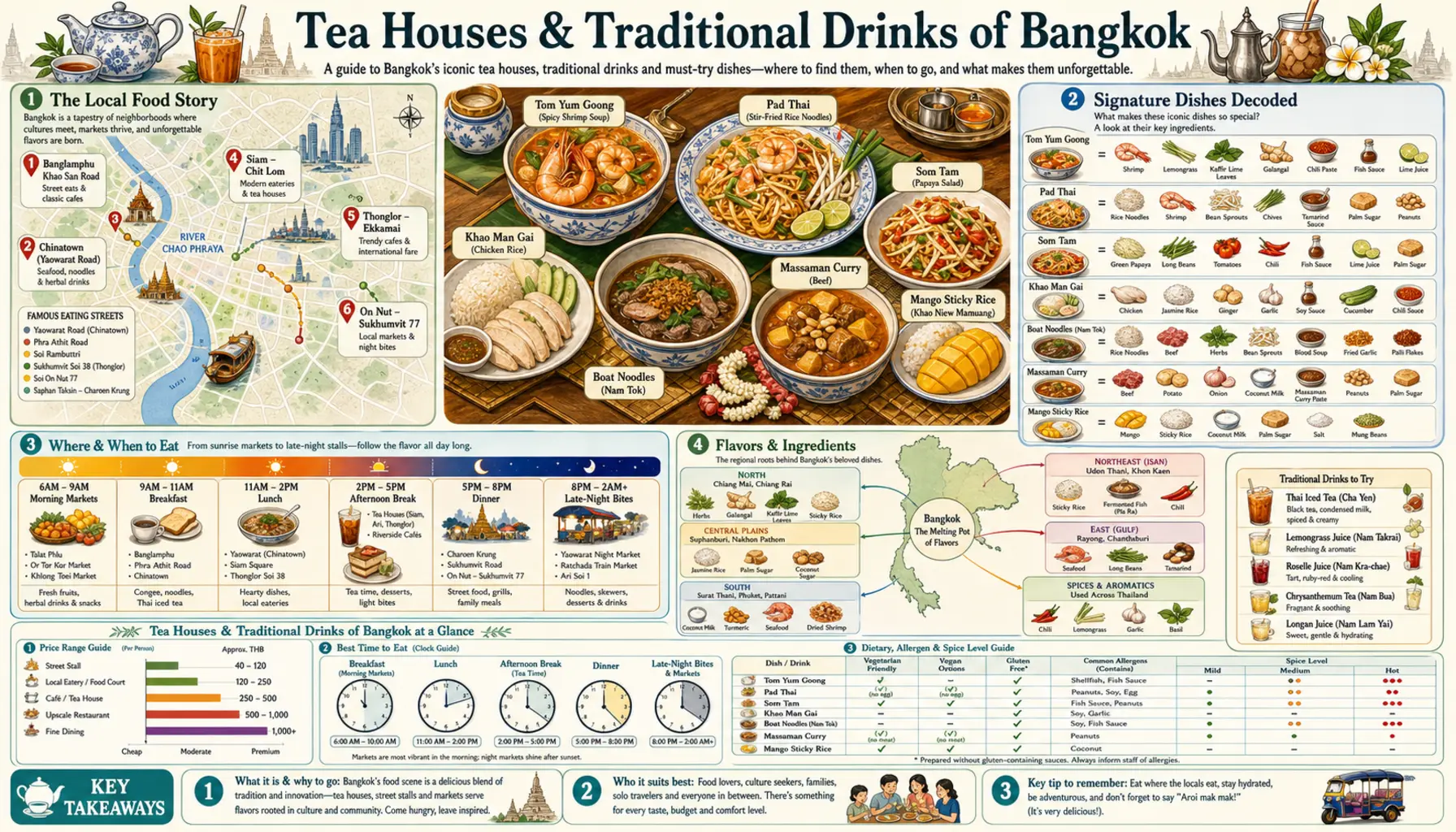
The orange one is cha yen: black tea brewed absurdly strong, sweetened with condensed milk, finished with a pour of evaporated milk and dropped over crushed ice into a plastic bag with a rubber band round the straw. It costs almost nothing from a street cart and is the single most Bangkok drink there is. Behind it sits a whole vocabulary — oliang, nom yen, cha manao, anchan — plus Chinatown's Chinese-Thai tea houses and a newer generation of tasting rooms treating single-origin leaf seriously.
What to order
Cha yen is the iced milk tea; cha dam yen is the same brew without milk and much less cloying if you ask for it. Oliang is the local iced coffee, roasted with corn and sesame, smoky and bitter. Nom yen is the alarming pink one, milk with sala syrup. Cha manao, black tea with lime, is the best drink in genuine heat. Chinatown carts also sell chrysanthemum (nam kek huai), roselle (nam krachiap), lemongrass, bael fruit, and the blue butterfly-pea anchan that flips purple when lime hits it. Say "wan noi" for less sugar, because the default setting is very sweet indeed.
Where to sit down
Double Dogs Tea Room on Yaowarat Road is the obvious first stop, a narrow Chinatown shophouse pouring Chinese leaf gongfu-style among the gold shops and neon. Peace Oriental Teahouse keeps quieter branches around Sukhumvit and Ari for single-origin tea and matcha. For the colonial-hotel version, the Authors' Lounge at the Mandarin Oriental serves afternoon tea in a white wicker atrium and generally needs booking, while the Erawan Tea Room at Ratchaprasong does a Thai-leaning equivalent above the traffic. ChaTraMue's orange kiosks, in most malls and near many BTS stations, are the dependable everywhere option when you just want a cha yen.