The Con Dao Islands: Wild Nature & Island History
A visual guide from the Phu Quoc & Con Dao travel guide — see all posters in Visual Guides.
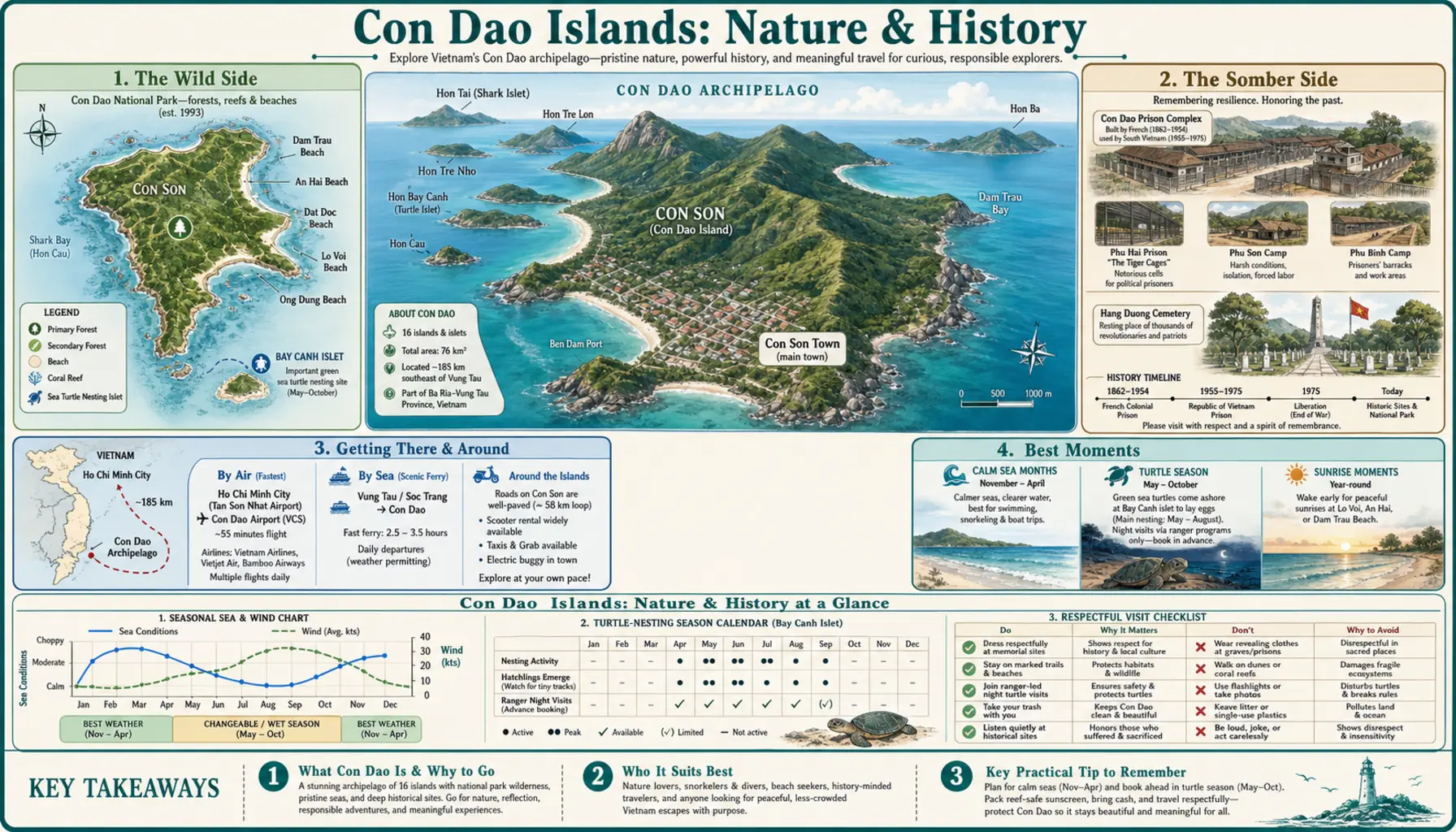
An hour's flight from Saigon, the Con Dao archipelago feels like Vietnam with the volume turned off: sixteen mostly wild islands where jungle ridges drop to empty beaches and the surrounding sea is national-park protected. The calm is the whole point — this is the country's best stage for watching sea turtles come ashore, diving reefs that see only a handful of boats a day, and riding an empty coast road from viewpoint to viewpoint.
Wild Con Dao
Con Dao National Park protects most of the land and a wide marine belt, and its beaches are Vietnam's most important sea-turtle nesting grounds — in season, roughly May to October, rangers run overnight watches on Bay Canh islet as green turtles come ashore to lay. Days go to near-empty sands like Dam Trau, forest walks and boat trips; seas are generally calmest from around March to September, while the winter monsoon brings wind and swell.
Reefs & the Coast Road
The marine half of the park is just as wild: the reefs around the outer islets hold some of Vietnam's healthiest coral, dive boats run out of Con Son town from roughly February to September, and the seagrass meadows shelter turtles, rays and the country's last dugongs. Back on the main island, rent a scooter for the coast road — past Con Son's sleepy seafront of tamarind trees and faded colonial-era villas, once a fishing outpost and still barely more than a village, up to the cliff viewpoints above Ben Dam harbour, and on to Dam Trau, a forest-backed crescent where planes from the tiny airfield skim the headland at sunset. Boat trips often finish beneath Bay Canh's 19th-century lighthouse — the best seat for watching the archipelago go gold.